
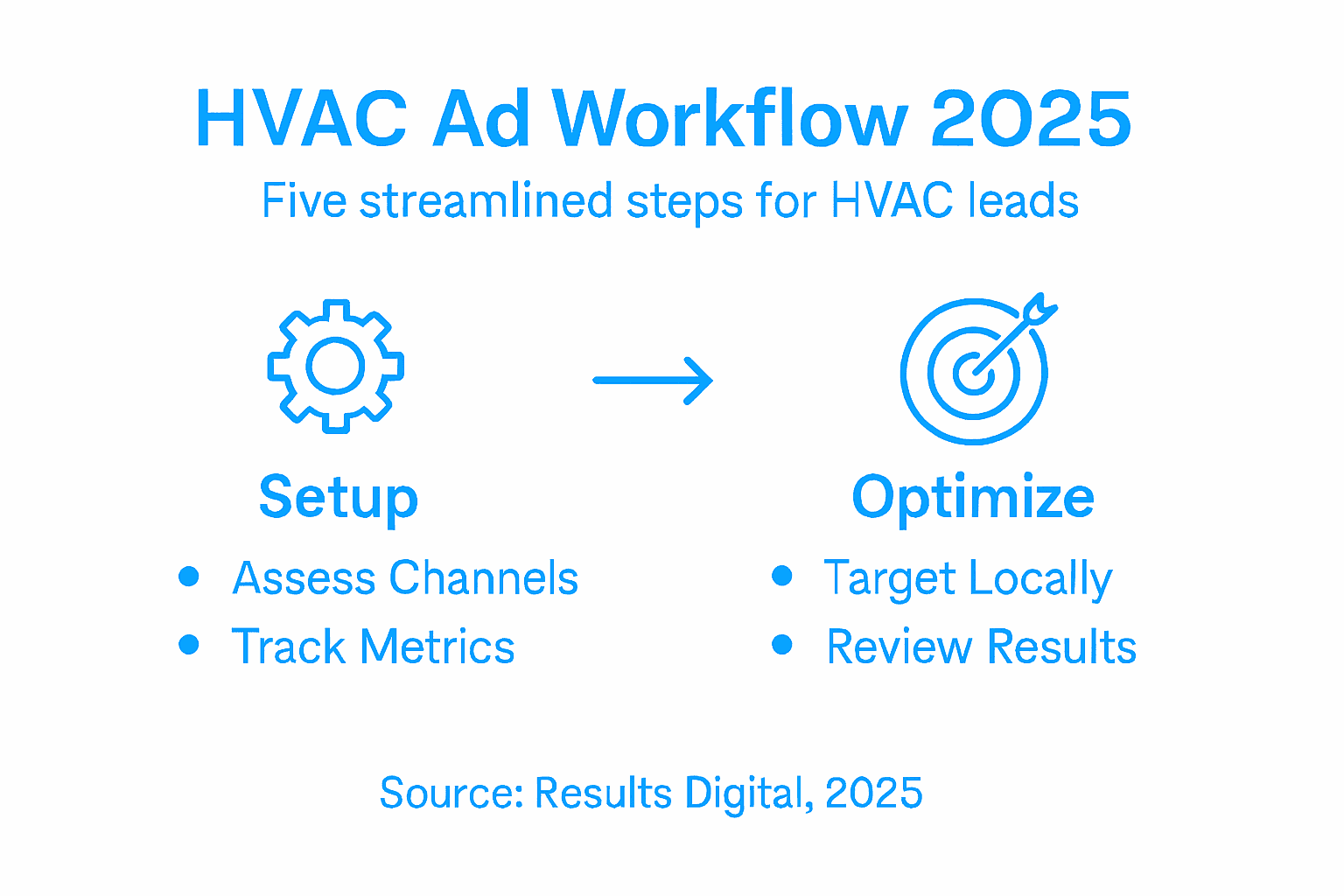
Every United States HVAC business owner knows the challenge of turning digital ad spend into reliable bookings and meaningful growth. Sorting through multiple advertising channels, campaigns, and platforms can feel overwhelming without a clear workflow. By focusing on a comprehensive evaluation and integrating actionable data-driven strategies, you can refine your digital marketing for 2025 and consistently attract quality local leads who actually convert into appointments.
Table of Contents
- Step 1: Assess Current Advertising Channels And Goals
- Step 2: Set Up Tracking And Reporting Systems
- Step 3: Build Targeted Campaigns For Local Leads
- Step 4: Monitor Ad Performance And Adjust Strategies
- Step 5: Validate Results And Optimize For Bookings
Quick Summary
| Key Takeaway | Explanation |
|---|---|
| 1. Assess Advertising Channels Thoroughly | Document all your digital platforms and their performance metrics to identify effective channels for HVAC leads. |
| 2. Implement Strong Tracking Systems | Use tools like Google Analytics and Facebook Pixel to capture detailed performance data and drive marketing strategies. |
| 3. Create Targeted Local Campaigns | Tailor your advertising messages based on local demographics and needs to connect with potential customers effectively. |
| 4. Continuously Monitor Ad Performance | Regularly analyze key performance indicators to adapt your campaigns and maximize lead generation efforts. |
| 5. Optimize Conversion Tracking | Analyze the customer journey and interactions to improve booking rates and overall marketing effectiveness. |
Step 1: Assess Current Advertising Channels and Goals
Assessing your current digital advertising workflow is the foundation for generating high-quality HVAC leads in 2025. This critical first step helps you understand where your marketing efforts are performing and identify strategic opportunities for improvement.
To conduct a comprehensive digital marketing evaluation, start by mapping your current advertising channels. This involves documenting every digital platform where you currently invest marketing resources, such as:
- Google Ads
- Facebook Ads
- Instagram promotions
- Local directory listings
- LinkedIn advertising
- Retargeting campaigns
- Email marketing efforts
Next, analyze the performance metrics for each channel. Gather key performance indicators like cost per lead, conversion rates, total leads generated, and return on ad spend. Compare these metrics against your business growth goals to determine which channels are delivering the most value.
Strategic digital advertising requires connecting your marketing efforts directly to measurable business outcomes.
Pay special attention to which channels are generating the highest quality leads – those most likely to convert into booked HVAC jobs. Not all leads are created equal, so focus on understanding the characteristics of leads that ultimately result in completed service contracts.
Quantify your current lead generation performance by tracking metrics such as:
- Total leads per month
- Lead conversion rate
- Average customer acquisition cost
- Lifetime customer value
- Revenue generated from digital advertising
Pro tip: Use Google Analytics and platform-specific tracking tools to get granular insights into your advertising channel performance.
Step 2: Set Up Tracking and Reporting Systems
Establishing robust tracking and reporting systems is crucial for understanding the performance of your HVAC digital advertising workflow. This step will help you transform raw data into actionable insights that drive strategic decision-making.
Begin by implementing comprehensive digital analytics across all your marketing channels. This means selecting and integrating tools that can capture detailed performance metrics specific to your HVAC business. Your tracking infrastructure should include:
- Google Analytics
- Facebook Pixel
- Google Tag Manager
- CRM lead tracking systems
- Call tracking software
- Ad platform native analytics
- Website conversion tracking
Configure custom tracking parameters that align directly with your business objectives. This might include tracking metrics like:
- Cost per HVAC service lead
- Lead-to-booking conversion rate
- Average job value from digital marketing sources
- Geographic performance of advertising campaigns
- Device-specific lead generation rates
Effective tracking transforms digital marketing from guesswork into a precise, data-driven strategy.
Integrate these tracking systems to create a unified view of your marketing performance. Use unique tracking URLs, conversion pixels, and event tracking to ensure you capture every interaction potential customers have with your digital advertising.

Cross-reference multiple data sources to validate your insights and eliminate potential tracking blind spots. This approach provides a comprehensive understanding of how different marketing channels contribute to your overall lead generation efforts.
Pro tip: Set up automated monthly reporting dashboards to streamline your performance monitoring and quickly identify trends or opportunities.
Here’s a comparison of core digital advertising tracking tools and their key business benefits:
| Tool | Primary Function | Business Impact |
|---|---|---|
| Google Analytics | Website traffic/data analysis | Informs budget allocation decisions |
| Facebook Pixel | Tracks Facebook ad actions | Optimizes campaign targeting |
| Google Tag Manager | Manages tracking codes easily | Speeds up marketing updates |
| Call Tracking Software | Monitors phone conversion data | Links calls to specific campaigns |
| CRM Lead Tracking | Records and scores leads | Improves follow-up and nurturing |
| Native Ad Analytics | Reports ad platform performance | Guides creative and bid adjustments |
| Conversion Tracking | Measures ad-driven actions | Aids ROI and revenue calculations |
Step 3: Build Targeted Campaigns for Local Leads
Creating highly targeted digital advertising campaigns is the key to generating quality HVAC leads in your local market. Your goal is to design precise marketing strategies that speak directly to potential customers in your specific service area.
Begin by leveraging data analytics for audience segmentation. This means breaking down your local market into distinct customer groups based on critical characteristics such as:
- Geographic location
- Home age and type
- Income levels
- Previous HVAC service history
- Seasonal maintenance needs
- Property ownership status
- Demographic profiles
Develop hyper-local targeting strategies that connect with your specific community. This involves creating ad content that reflects local language, addresses region-specific HVAC challenges, and demonstrates your understanding of neighborhood-specific needs.
Successful local campaigns transform generic advertising into personalized conversations with potential customers.
Configure precise geographic targeting in your digital advertising platforms. Use advanced settings in Google Ads and Facebook Ads to narrow your audience to specific zip codes, neighborhoods, and radius ranges around your service locations.
Design multiple ad variations that speak to different customer segments. For instance, create separate campaigns for:
- First-time homeowners needing system inspections
- Older home residents requiring equipment upgrades
- Seasonal maintenance seekers
- Emergency repair prospects
- Commercial property managers
Pro tip: Create location-based ad extensions that dynamically display your local service areas and nearest office contact information to increase ad relevance and trust.
Below is a summary of audience segment needs in local HVAC advertising:
| Segment Type | Example Need | Effective Campaign Focus |
|---|---|---|
| First-time Homeowners | System inspection and advice | Educational and trust-building ads |
| Older Home Residents | Equipment upgrades | Highlight energy savings |
| Maintenance Seekers | Regular seasonal tune-ups | Promote timely service offers |
| Emergency Prospects | Immediate repairs | Stress fast response and support |
| Property Managers | Large-scale service management | Showcase reliability and scale |
Step 4: Monitor Ad Performance and Adjust Strategies
Continuous monitoring and strategic adjustment of your digital advertising campaigns are critical for maximizing lead generation and return on investment for your HVAC business. This step transforms your marketing from a static approach to a dynamic, responsive system that evolves with your audience’s needs.
Analyze key performance indicators systematically to understand the effectiveness of your advertising efforts. Focus on tracking critical metrics that directly impact your business growth, including:
- Cost per lead
- Conversion rates
- Click-through rates
- Total leads generated
- Average lead value
- Geographic performance
- Device-specific engagement
Establish a weekly performance review process that allows you to quickly identify trends and make data-driven decisions. Compare your current campaign performance against your predefined benchmarks and industry standards for HVAC lead generation.
Digital marketing success comes from continuous learning and rapid adaptation.
Create comparative analysis frameworks to understand which advertising channels and targeting strategies deliver the most valuable leads. This means:
- Comparing performance across different platforms
- Analyzing audience segment response rates
- Evaluating ad creative effectiveness
- Tracking seasonal performance variations
- Identifying high-converting customer profiles
Utilize advanced analytics tools to drill down into granular performance data. Look beyond surface-level metrics to understand the complete customer journey and interaction points that lead to successful bookings.
Pro tip: Set up automated reporting dashboards that send weekly performance summaries directly to your email, allowing you to stay informed without spending hours manually compiling data.
Step 5: Validate Results and Optimize for Bookings
Validating and optimizing your digital advertising results transforms raw data into actionable strategies that directly drive HVAC service bookings. This critical step bridges the gap between digital marketing efforts and real-world business growth.
Analyze conversion tracking data to understand the complete customer journey from initial ad click to completed booking. This involves examining each interaction point that potentially influences a potential customer’s decision to schedule an HVAC service.
Implement comprehensive tracking mechanisms to capture every stage of lead conversion, including:
- Initial ad engagement
- Website visit duration
- Interaction with service pages
- Contact form submissions
- Phone call tracking
- Booking completion rates
- Post-booking customer satisfaction
Successful optimization requires a holistic view of your marketing performance beyond surface-level metrics.
Create a detailed conversion funnel analysis that helps you understand where potential customers might be dropping off in the booking process. Identify and address potential friction points by:
- Examining landing page design
- Evaluating call-to-action effectiveness
- Reviewing booking form complexity
- Analyzing response time to inquiries
- Checking mobile user experience
Utilize advanced attribution models to understand which specific marketing touchpoints contribute most significantly to booking completions. This means looking beyond last-click attribution and recognizing the multiple interactions that ultimately lead to a booked service.
Pro tip: Implement a closed-loop reporting system that tracks leads from initial ad interaction through to completed service to gain the most comprehensive understanding of your marketing performance.
Take Control of Your HVAC Digital Advertising in 2025
Struggling to generate high-quality local HVAC leads despite investing in multiple digital channels? The key challenges outlined in the article like tracking multi-channel performance, building targeted local campaigns, and optimizing for true booked jobs can feel overwhelming without expert guidance. You need a partner who understands the nuances of your industry and can deliver measurable, transparent results tailored specifically to local service providers.
At Results Digital, we specialize in exactly that. Our veteran-owned agency offers a unique exclusive partnership model so you face no conflicts of interest while dominating your market. We combine custom website design, local SEO, and data-driven Google Ads and Facebook campaigns that focus on exactly the metrics highlighted in the article such as cost per HVAC service lead and conversion tracking. With detailed reporting and no long-term contracts, you stay in control and see the direct impact on your calls, bookings, and revenue.
Ready to transform your advertising workflow and finally turn digital data into dependable HVAC jobs?
Partner with Results Digital to harness proven strategies designed to maximize your local lead generation and marketing ROI. Visit our landing page today to start your journey toward consistent, high-quality HVAC leads and booked jobs.
Frequently Asked Questions
How can I assess my current digital advertising channels for HVAC leads?
To assess your current digital advertising channels, map each platform where you invest marketing resources, such as Google Ads and Facebook Ads. Next, analyze key performance metrics like cost per lead and conversion rates to identify which channels provide the most value.
What key metrics should I track to measure the performance of my HVAC advertising campaigns?
Focus on tracking metrics such as total leads per month, lead conversion rates, and average customer acquisition cost. By regularly monitoring these indicators, you can evaluate the effectiveness of your campaigns and make necessary adjustments to improve results.
How can I create targeted campaigns for local HVAC leads?
To create targeted campaigns for local HVAC leads, segment your audience based on factors like geographic location, home types, and income levels. Develop specific ad content that addresses the unique needs of each segment to enhance engagement and conversion.
What are effective ways to monitor and adjust my advertising strategies?
Establish a weekly review process to analyze key performance indicators and compare them to predefined benchmarks. This systematic evaluation will help you identify trends and make data-driven adjustments to your campaigns.
How can I optimize my digital advertising workflow to increase service bookings?
Optimize your workflow by implementing comprehensive tracking mechanisms to capture every stage of the customer journey. Regularly analyze conversion data to identify and address friction points in the booking process, enhancing overall efficiency and increasing bookings.
Recommended
- Role of Digital Advertising in HVAC Lead Growth
- Local Ads Setup Workflow for HVAC Lead Generation
- Why Invest in Google Ads for HVAC Leads
- Lead Generation Strategies 2025: Winning More Local HVAC Customers
- Digital Markteting for Roofing Companies
- Digital Marketing for Fire Protection Companies
- Digital Marketing for Damage Restoration Companies
- Digital Marketing for Asbestos Abatement Companies
