
Many local contractors pour money into digital ads only to watch clicks vanish without booking a single job. The culprit? Focusing on vanity metrics like impressions instead of digital marketing for local contractors metrics that actually drive leads. Understanding which numbers matter transforms wasted ad spend into steady, profitable bookings.
Table of Contents
- Introduction To Digital Marketing Metrics
- Key Digital Marketing Metrics And Their Impact
- Common Misconceptions About Digital Marketing Metrics
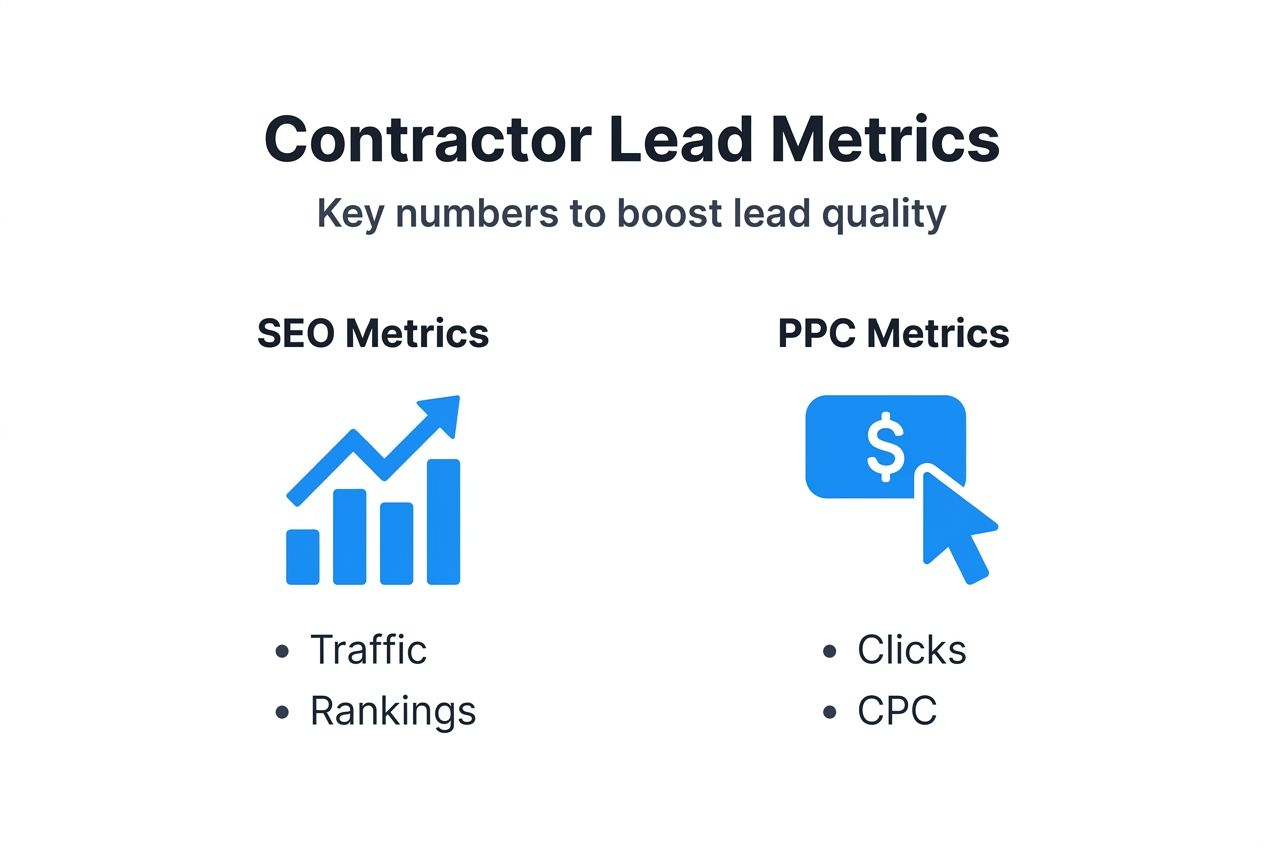
- Comparison Of SEO Vs PPC Metrics For Local Contractors
- Metric-Driven Campaign Optimization Process
- Conclusion And Next Steps
- Grow Your Contractor Business With Expert Digital Marketing
- Frequently Asked Questions
Key takeaways
| Point | Details |
|---|---|
| Metric focus drives quality | Tracking CTR and conversion rate improves both lead volume and quality compared to vanity metrics. |
| Ad costs respond to engagement | Higher click-through rates and lower bounce rates directly reduce your cost per click and improve ROI. |
| Impressions mislead without context | Vanity metrics create false success signals unless tied to actual conversions and booked jobs. |
| Channel integration reveals opportunities | Combining SEO and PPC metric analysis uncovers the most profitable budget allocation strategies. |
| Continuous tracking compounds results | Monthly metric reviews and campaign adjustments create steady improvement in lead generation performance. |
Introduction to digital marketing metrics
Digital marketing metrics are quantifiable measures that reveal how your campaigns perform across channels like search ads, social media, and organic search results. For local service contractors, these numbers determine whether your marketing budget generates quality leads or evaporates without booked jobs.
Contractors typically invest in three main channels. SEO builds organic presence through search rankings, PPC delivers immediate paid visibility on Google and social platforms, and social media supports brand awareness. Each channel produces distinct metrics that guide optimization decisions.
Key metrics you will encounter include click-through rate (CTR), cost per click (CPC), conversion rate, bounce rate, and cost per lead. CTR shows how many people click your ads after seeing them. CPC reveals what you pay for each click. Conversion rate measures how many clicks become actual leads through calls or form submissions. Bounce rate indicates whether visitors stay engaged or leave immediately.
Many contractors mistakenly focus on impressions instead of engagement metrics, leading to inflated perceptions of success without real business impact. An ad with 10,000 impressions sounds impressive until you realize only 12 people called and just 2 booked jobs. The benefits of digital marketing become clear when you track metrics tied to revenue, not visibility.
The foundation of effective digital marketing lies in understanding which numbers predict profitability. Impressions tell you how often ads appear but say nothing about engagement or lead quality. Contractors who master actionable metrics make smarter budget decisions across common digital marketing channels and consistently outperform competitors stuck chasing vanity numbers.
Key digital marketing metrics and their impact
Click-through rate measures ad engagement and directly influences what you pay per click. Google and Facebook reward relevant ads with higher quality scores, which lower your CPC. Increasing your click-through rate by just 1% can lower your ad costs by up to 15%. A plumbing contractor with a 3% CTR pays significantly less per click than a competitor at 1.5% targeting the same keywords.

Cost per click determines budget efficiency. Lower CPC means your ad spend generates more clicks for the same budget. A roofing company spending $1,500 monthly gets 500 clicks at $3 CPC but 750 clicks at $2 CPC. Those extra 250 clicks translate to more phone calls and booked estimates when combined with strong conversion rates.
Conversion rate gauges how many clicks turn into actual leads through phone calls, contact forms, or booking requests. This metric matters most for ROI because clicks without conversions waste money. An HVAC contractor with a 5% conversion rate generates 25 leads from 500 clicks, while a 2% rate produces just 10 leads from the same traffic.
Bounce rate signals website engagement and influences both ad costs and conversions. Visitors who leave immediately after landing on your site inflate your CPC over time as platforms detect poor user experience. High bounce rates also kill conversions. An electrician whose service page loads slowly or lacks clear contact options loses leads even when ads perform well.
Cost per lead benchmarks vary by service type and market competition but typically range from $30 to $100 for local contractors. A landscaping company in a competitive urban market might pay $80 per lead, while a rural plumber averages $35. Tracking this metric against job value reveals which campaigns deliver profitable returns.
Combining these metrics exposes campaign strengths and weaknesses. A low CTR suggests weak ad copy or targeting. High CTR with low conversions points to landing page problems. Strong conversions with high cost per lead indicate budget allocation issues. Local SEO strategies and paid ads work together when you understand the importance of core metrics across channels.
Pro Tip: Review your quality score in Google Ads monthly. Scores below 5 signal problems with ad relevance, landing page experience, or expected CTR that cost you money every single day.
Common misconceptions about digital marketing metrics
Vanity metrics like impressions create false confidence by showing large numbers without measuring actual business impact. Up to 70% of impressions in local ads do not translate to meaningful user actions or leads. A painting contractor celebrating 25,000 monthly impressions might generate zero booked jobs if CTR sits at 0.3% and conversion rate hits just 1%.
High website traffic without conversion tracking wastes budget on visitors who never become customers. Many contractors celebrate growing traffic numbers while missing that most visitors leave without calling or filling out contact forms. Traffic growth means nothing without systems to track which visitors convert and which marketing sources deliver quality leads.
Ignoring lead quality in favor of quantity destroys profitability even when metrics look healthy. An electrical contractor generating 100 leads monthly at $25 each sounds successful until you realize only 8 leads actually book jobs. Another contractor with 40 leads at $50 each books 15 jobs because better targeting attracts ready-to-buy customers.
Misunderstanding conversion tracking leads contractors to optimize the wrong elements. Some businesses count every form submission as a conversion without verifying whether submissions result in actual estimates or jobs. Others fail to track phone calls entirely, missing the conversion path most local service customers prefer.
“Accurate conversion tracking empowers contractors to focus budget on channels and campaigns that generate real revenue, not just activity that looks productive on paper.”
Relying solely on platform-reported metrics without independent verification creates blind spots. Ad platforms optimize for their definitions of success, which may not align with your business goals. A Facebook campaign optimized for link clicks might deliver impressive click numbers while generating few actual service requests.
Successful contractors avoid these pitfalls by establishing clear definitions of valuable actions and tracking every conversion path. When you know exactly which ads and keywords generate booked jobs, not just clicks or impressions, every dollar works harder toward investment in digital marketing that builds your business.
Comparison of SEO vs PPC metrics for local contractors
SEO and PPC channels generate different metrics that reveal distinct performance patterns and require separate optimization approaches. Understanding these differences helps contractors allocate budgets effectively across both channels.
| Metric Category | SEO Focus | PPC Focus |
|---|---|---|
| Primary metrics | Organic traffic growth, keyword rankings, backlink quality | CTR, CPC, conversion rate, quality score |
| Cost structure | Lower direct costs, ongoing content and optimization investment | Direct per-click costs, immediate budget control |
| Lead generation speed | Slower ramp-up, 3-6 months for significant results | Immediate visibility and lead flow upon launch |
| Measurement complexity | Attribution challenges, longer conversion windows | Direct conversion tracking, clear ROI calculation |
| Competitive factors | Domain authority, content quality, local citations | Bid competition, ad relevance, landing page experience |
SEO metrics focus on organic growth indicators that build long-term visibility. Keyword rankings show where your website appears for target search terms. Organic traffic measures visitors arriving from unpaid search results. Backlink quality indicates industry authority and influences rankings. These SEO metrics and benefits compound over time as your site gains authority.
PPC metrics emphasize immediate performance and budget efficiency. Click-through rate reveals ad relevance and appeal to target audiences. Cost per click determines how efficiently you acquire visitors. Conversion rate measures how effectively landing pages turn clicks into leads. Quality score combines these factors to determine ad costs and placement. Understanding PPC metrics fundamentals helps contractors maximize immediate returns.
SEO delivers lower per-lead costs over time but requires patient investment before generating significant results. A roofing contractor investing in local SEO might spend six months building rankings before organic leads match paid campaign volume. However, those organic leads cost less to acquire once rankings stabilize.
PPC provides fast lead influx with complete budget control and immediate visibility. An HVAC company launching a new service area can generate qualified leads within days through targeted Google Ads. This speed comes at higher per-lead costs compared to established SEO efforts.
Integrated analysis reveals optimization opportunities across both channels. Contractors using both approaches can:
- Test messaging and offers in PPC campaigns, then apply winners to SEO content
- Identify high-converting keywords in paid search, then target them organically
- Fill seasonal gaps in organic traffic with strategic paid campaigns
- Balance immediate lead needs with long-term organic growth
Lead quality and cost effectiveness vary by service type, market competition, and campaign maturity. Emergency services often perform better in PPC due to immediate need, while project-based services benefit from SEO’s ability to capture research-phase customers. Smart contractors track metrics across both channels to find their optimal marketing mix.
Metric-driven campaign optimization process
Transforming digital marketing metrics into profitable campaigns requires a systematic approach that turns data into actionable improvements. Follow this framework to optimize lead generation consistently.
-
Set up precise conversion tracking for every lead source. Install tracking pixels for online form submissions. Configure call tracking numbers that identify which ads generate phone calls. Create unique tracking parameters for each campaign and ad group. Test all tracking systems before spending significant budget to ensure accuracy.
-
Establish baseline metrics during your first 30 days. Record initial CTR, CPC, conversion rate, bounce rate, and cost per lead for each campaign. Document which ads and keywords generate the most leads. Note any patterns in lead quality by source or time of day.
-
Monitor performance weekly to catch problems early. Review which ads maintain strong CTR and which decline. Check for sudden CPC increases signaling new competition or quality score drops. Identify campaigns approaching budget limits before they stop running.
-
Analyze trends monthly to guide strategic adjustments. Compare current metrics against baselines and previous months. Calculate which campaigns deliver the lowest cost per booked job, not just cost per lead. Identify underperforming keywords and ads consuming budget without generating quality leads.
-
Adjust budgets to focus spending on proven performers. Shift money from campaigns with high cost per lead to those generating booked jobs efficiently. Increase bids on high-converting keywords. Pause ads with CTR below 2% after sufficient data collection.
-
Test improvements systematically to compound results. Create new ad variations addressing common customer questions. Build dedicated landing pages for top-performing services. Experiment with different call-to-action buttons and contact form designs.
Pro Tip: Review your conversion data weekly but make major budget changes monthly. Weekly checks prevent disasters, but monthly reviews provide enough data for confident strategic decisions.
A real case study demonstrates this approach in action. A painting contractor in Phoenix struggled with $95 cost per lead and 2.1% conversion rate from 800 monthly clicks. Analysis revealed high bounce rates on mobile devices and weak ad copy that attracted price shoppers.
The contractor implemented mobile-optimized landing pages, rewrote ads emphasizing quality and warranties, and paused keywords focused solely on price. Over 90 days, CTR improved from 3.2% to 4.8%, bounce rate dropped from 67% to 41%, and conversion rate climbed to 3.5%. Cost per lead fell to $62 while lead quality improved, resulting in 35% higher ROI.
This optimization success came from focusing on actionable metrics rather than vanity numbers. The contractor ignored impression counts and concentrated on metrics tied directly to revenue. Lead generation optimization follows clear patterns when you track the right numbers and respond strategically. Applying these local lead generation steps consistently separates growing contractors from those stuck with stagnant results.
Conclusion and next steps
Mastering digital marketing metrics transforms how local contractors generate leads and grow their businesses. CTR, conversion rate, and cost per lead reveal which campaigns deserve increased investment and which waste money on unqualified traffic. Bounce rate and quality score expose technical problems that inflate costs without contractor awareness.
Ongoing metric tracking creates continuous improvement as you refine targeting, messaging, and landing pages based on real performance data. Monthly reviews identify trends before they become expensive problems. Quarterly analysis guides strategic decisions about channel mix and budget allocation.
The difference between contractors who dominate local markets and those struggling for visibility often comes down to metric literacy. Understanding which numbers predict profitability allows you to make confident marketing decisions backed by data rather than guesswork.
Partnership with specialized digital marketing experts accelerates this process by combining your industry knowledge with proven optimization frameworks. Digital marketing services for contractors that emphasize measurable results help you avoid common pitfalls while scaling lead generation efficiently.
Grow your contractor business with expert digital marketing
Results Digital specializes in helping local contractors improve lead generation through metric-driven strategies that maximize every marketing dollar. Our exclusive partnership model ensures you never compete with another contractor in your market for the same leads.

We combine technical expertise with contractor-specific experience to build campaigns that generate quality leads, not just clicks or impressions. Our digital marketing services for local contractors include conversion tracking setup, campaign optimization, and transparent reporting so you always know where your money goes.
Explore our lead generation solutions designed specifically for trades and service businesses. Whether you need immediate lead flow through paid ads or long-term growth through SEO, our general contractor marketing experts deliver measurable results without locking you into lengthy contracts.
Frequently asked questions
What are the most important digital marketing metrics for local contractors?
CTR, conversion rate, cost per lead, bounce rate, and quality score provide the clearest picture of campaign performance. CTR reveals ad relevance and influences costs. Conversion rate measures how many clicks become actual leads. Cost per lead benchmarks efficiency against industry standards. Bounce rate signals website engagement problems. Quality score combines these factors to determine ad placement and costs.
How can I track conversions effectively for my service business?
Set up tracking for phone calls using call tracking numbers that identify campaign sources. Install conversion pixels on contact forms and booking pages through Google Analytics and ad platform tools. Configure event tracking for every valuable action customers can take on your site. Test all tracking systems weekly to ensure accuracy and catch technical issues before they corrupt data.
Why are impressions not enough to measure marketing success?
Impressions count how many times ads appear but do not measure engagement or lead actions. An ad with 50,000 impressions might generate zero phone calls if targeting or messaging fails. Relying solely on impressions wastes budget without driving booked jobs because visibility alone does not create customers.
What is a good cost per lead for local service contractors?
Typical cost per lead ranges from $30 to $100 depending on service type, market competitiveness, and campaign maturity. Emergency services in competitive markets often see higher costs while specialized services in smaller markets average lower. Track cost per lead against your average job value to determine profitability. Consistent metric optimization lowers this cost over time as campaigns improve.
How often should I review my digital marketing metrics?
Check key metrics weekly to catch sudden problems like budget depletion or quality score drops. Conduct thorough monthly reviews to analyze trends and make strategic adjustments. Quarterly assessments guide major decisions about budget allocation and channel strategy. This cadence balances responsiveness with sufficient data for confident decisions.
