
Standing out in a crowded market is tough when homeowners in your area turn to Google the moment their HVAC fails. Every missed phone call or job request feels like an opportunity slipping to a competitor. For experienced contractors, mastering Google Ads delivers not just more clicks but quality leads ready to book today. This guide will cover the fundamentals of building high-performing campaigns, show why strategic keyword research matters, and highlight cost-saving tactics so you turn ad spend into real revenue.
Table of Contents
- Google Ads Fundamentals For Contractors
- Types Of Google Ads Campaigns For HVAC
- Setting Up An Effective HVAC Ad Campaign
- Smart Targeting And Geographic Focus
- Managing Costs, Tracking Results, Maximizing ROI
- Common Pitfalls And Optimization Strategies
Key Takeaways
| Point | Details |
|---|---|
| Understand Campaign Structure | Organize Google Ads campaigns by service type or location to effectively control budgets and optimize performance. |
| Utilize Appropriate Campaign Types | Focus on Search campaigns for immediate leads and consider Local Services ads for added trust and visibility in competitive markets. |
| Implement Conversion Tracking | Set up conversion tracking to analyze which ads and keywords yield actual bookings, guiding better budget allocation. |
| Refine Targeting | Narrow your ads’ geographic focus to reach potential customers accurately, increasing lead quality and reducing wasted budget. |
Google Ads Fundamentals for Contractors
Google Ads operates as a pay-per-click advertising platform where you create campaigns that appear when potential customers search for services like yours. When someone in your area searches “emergency HVAC repair near me” or “furnace installation in [city]”, your ad can show up at the top of Google search results, right before the organic listings. This placement matters because homeowners searching for HVAC services are actively looking to hire someone right now. They’re not browsing casually or researching for later. They need your services today. That’s why understanding how Google Ads delivers these high-intent leads is critical for contractors competing in crowded local markets.
The platform works through a relatively straightforward structure. You set up an account, organize your campaigns by service type or location, select keywords that match customer searches, write ad copy that speaks to their problem, and bid on how much you’re willing to pay per click. Google then places your ads in an auction system where the highest bidder doesn’t automatically win. Instead, Google considers both your bid amount and your ad quality score. A contractor with a 50-dollar bid and a high-quality score can outrank a competitor bidding 75 dollars with poor ad relevance. Understanding keyword research and bidding strategies helps you spend your advertising budget more efficiently than competitors who just throw money at the platform and hope something sticks.
What separates beginners from contractors who actually win leads is the ability to structure campaigns strategically. Instead of dumping all your keywords into one campaign and calling it a day, experienced contractors separate campaigns by service type (AC replacement, maintenance, emergency repairs) or by geography (if you serve multiple towns). This organization gives you control over when your ads show, how much you spend on each service, and which ads get tested and refined. You’ll also need to set up conversion tracking so Google knows when a click actually turns into a phone call or booked appointment. Without this data, you’re flying blind, unable to tell which ads and keywords are actually bringing you quality jobs versus just draining your budget.
Pro tip: Start with your top three highest-margin services and create separate campaigns for each one, then track which drives the most qualified calls before expanding to additional services.
Types of Google Ads Campaigns for HVAC
Google offers several campaign types, but for HVAC contractors, three stand out as the most effective for generating qualified leads. Search campaigns are where most contractors start because they capture customers actively searching for your services. When someone types “HVAC repair near me” or “emergency AC service,” your text ad appears at the top of Google search results. These campaigns work because you’re reaching people at their moment of need. Display campaigns show image or text ads across thousands of websites and apps that your potential customers visit. While search captures active searchers, display builds awareness among people who haven’t thought about HVAC yet but might need you soon. Local Services ads (also called Google Guaranteed) appear at the very top of search results with a green badge, showing your phone number and customer reviews directly. This campaign type is particularly powerful for HVAC because homeowners trust the “Google Guaranteed” seal, and you only pay when someone calls you through the platform, not just when they click.
Search campaigns are typically where you should concentrate your budget first. Understanding how to set objectives and configure campaign settings for maximum performance ensures you’re not wasting money on clicks that don’t convert to jobs. Most contractors find search delivers 60 to 75 percent of their Google Ads leads because the intent is crystal clear. Someone searching for furnace repair is ready to hire. Someone scrolling through a news website isn’t thinking about their HVAC system yet. The power of search campaigns lies in keyword selection and ad copy that directly addresses the customer’s problem. If someone searches “my AC is making a noise,” your ad should speak to that specific concern with urgency and relevance. Display campaigns, on the other hand, work better once you’ve established search profitability. They keep your name in front of people over time, creating brand recognition that pays dividends when they eventually need service.
Local Services ads deserve special attention if you operate in a competitive market. These ads bypass the typical pay-per-click model and show your business information prominently before organic results. The green badge signals trust, especially to older homeowners who value that third-party verification. However, Google reviews matter heavily for this campaign type. You need solid ratings and regular customer feedback to be competitive. Many contractors run search and local services campaigns together to dominate the top of the page. When someone searches for HVAC service, they see your search ad, your local services ad with reviews, and your website in organic results. That triple presence makes it nearly impossible for them to choose a competitor. The key is starting with the campaign type that matches your current position. If you’re new to Google Ads, begin with search campaigns targeting your most profitable services, measure which keywords convert, and expand from there.
Pro tip: Set up conversion tracking for phone calls and online booking requests in your first week, then wait for at least 50 conversions before optimizing your bids, so Google has enough data to improve performance automatically.
Here’s a quick comparison of Google Ads campaign types most effective for HVAC contractors:
| Campaign Type | How It Works | Best For | Typical Payment Model |
|---|---|---|---|
| Search Campaign | Text ads appear in search results | Immediate, high-intent leads | Pay-per-click |
| Display Campaign | Image/text ads shown on sites & apps | Brand awareness & reminders | Pay-per-click |
| Local Services Ads | Business info with “Google Guaranteed” badge | Trusted local calls | Pay-per-call (leads only) |
Setting Up an Effective HVAC Ad Campaign
Setting up an effective HVAC ad campaign starts with understanding your customer’s pain points and building your campaign structure around them. Before you write a single ad, identify your most profitable services. Are emergency repairs your bread and butter? Do you specialize in seasonal maintenance? Are new installations where you make the most money? Your campaign structure should mirror these revenue streams because different customer problems require different messaging and bidding strategies. A homeowner searching for “emergency furnace repair at 2 AM” has different urgency than someone searching “annual HVAC maintenance plans.” You’ll want separate campaigns for each because the person in emergency mode will accept higher prices and book faster, while the maintenance customer is comparing multiple companies and price shopping. This segmentation means you can bid more aggressively on emergency work and more conservatively on maintenance, optimizing every advertising dollar.

Your next step is keyword research that reflects actual customer language. Don’t just guess what people search for. Use Google’s Keyword Planner tool to find search volume and competition levels for terms your customers actually type. Most contractors miss this and bid on generic keywords like “HVAC” or “heating” that cost too much and attract people just browsing. Instead, target specific intent keywords like “furnace won’t turn on,” “AC not cooling,” “annual tune up near me,” or “emergency heat repair in [your city].” These keywords tell you exactly what problem the customer has, letting you craft ad copy that speaks directly to their situation. When creating your ads, write headlines that address their specific problem, not generic company descriptions. Someone searching “my heat stopped working in winter” doesn’t care about your company history. They care that you answer emergency calls fast and can fix it today. Your ad copy should make that crystal clear in the first line.
Conversion tracking is where most contractors stumble. You need to know which campaigns, keywords, and ads actually produce phone calls and booked jobs, not just clicks. Google Ads lets you set up call conversions so every phone call from your ads gets tracked and attributed. You should also add a call button in your ads, track online booking requests if you offer them, and measure form submissions from your website. Without this data, you’re flying blind. You might think a particular campaign is working because it gets lots of clicks, but if those clicks don’t convert to jobs, you’re wasting budget. Setup takes maybe 30 minutes but saves you thousands in wasted spending. Understanding your most effective lead generation strategies for HVAC markets helps you focus your budget on campaigns that actually produce booked appointments, not just traffic.
Pro tip: Create separate conversion actions for phone calls and online bookings so you can see which channels produce the highest-quality leads, then gradually shift your budget toward whichever drives more paying jobs.
Smart Targeting and Geographic Focus
One of the biggest mistakes HVAC contractors make with Google Ads is casting too wide a net. You might set up a campaign that targets your entire state or even multiple states, thinking more geographic reach equals more leads. Wrong. A homeowner in Portland, Maine is not your customer if you operate in Portland, Oregon. Neither is someone 45 minutes away in a different service area. Wasting budget on people you cannot actually service means fewer dollars for people you can. Geographic targeting in Google Ads lets you narrow your ads to specific cities, zip codes, or even radius distances from your business location. This precision matters because you control exactly where your ads appear and who sees them. If you service a 15-mile radius from your office, set your targeting to that 15-mile radius. If you operate in three specific towns, create separate campaigns for each town so you can bid differently based on competition and demand in each area.
Beyond geography, smart targeting means understanding who actually calls you back and books jobs. Demographic and psychographic targeting based on customer characteristics helps you focus on high-intent audiences rather than everyone in your service area. Think about your ideal customer. Are they homeowners aged 55 and older who value reliability over price? Are they young professionals who book online and want convenience? Are they landlords managing rental properties? Your messaging and targeting should reflect who actually hires you. If you specialize in emergency repairs, you might target people searching at 11 PM on a Sunday. If you focus on preventative maintenance, target people searching in spring and fall when HVAC systems get seasonal tune-ups. Google Ads lets you adjust your bids based on the time of day and season, meaning you can spend more aggressively when your ideal customers are searching and less during slow times.
Location-based targeting also includes understanding competitive intensity in different areas. Some neighborhoods might be oversaturated with HVAC ads, driving costs up. Other areas nearby might have less competition and cheaper clicks. By analyzing performance data across your service areas, you can identify where your ads produce the best return on investment. Maybe your ads in downtown bring lots of clicks but few conversions because landlords dominate that area and you specialize in residential work. Meanwhile, your ads in suburban neighborhoods convert at twice the rate even though they get fewer clicks. This data should guide your budget allocation. Shift more spending toward high-converting areas and reduce spending in money-losing zones. Geographic focus combined with performance analysis transforms your Google Ads account from a spray-and-pray operation into a precision targeting machine that brings you jobs in the exact neighborhoods where you perform best.
Pro tip: Start with one city or zip code where you have existing customers and strong reviews, measure your cost per lead for 30 days, then expand to adjacent areas only after you achieve profitable metrics.
Managing Costs, Tracking Results, Maximizing ROI
Google Ads spending can spiral fast if you don’t actively manage it. Your daily budget is just a guardrail, not a promise. Google will spend up to 20 percent more on high-volume days, meaning a 100-dollar daily budget could hit 120 dollars some days. Over a month, that adds up. The real cost control happens at the campaign and keyword level. Set individual budgets for each campaign based on performance potential. Your emergency repair campaign might get 150 dollars daily because emergency calls convert at 30 percent. Your seasonal maintenance campaign might get 50 dollars daily because those customers compare prices more. This allocation ensures your most profitable work gets the budget it deserves. You should also set bid caps on individual keywords. If a keyword costs more than 8 dollars per click but your average job is 400 dollars, you cannot afford to pay 15 dollars per click no matter how many clicks it brings. These guardrails prevent runaway costs.
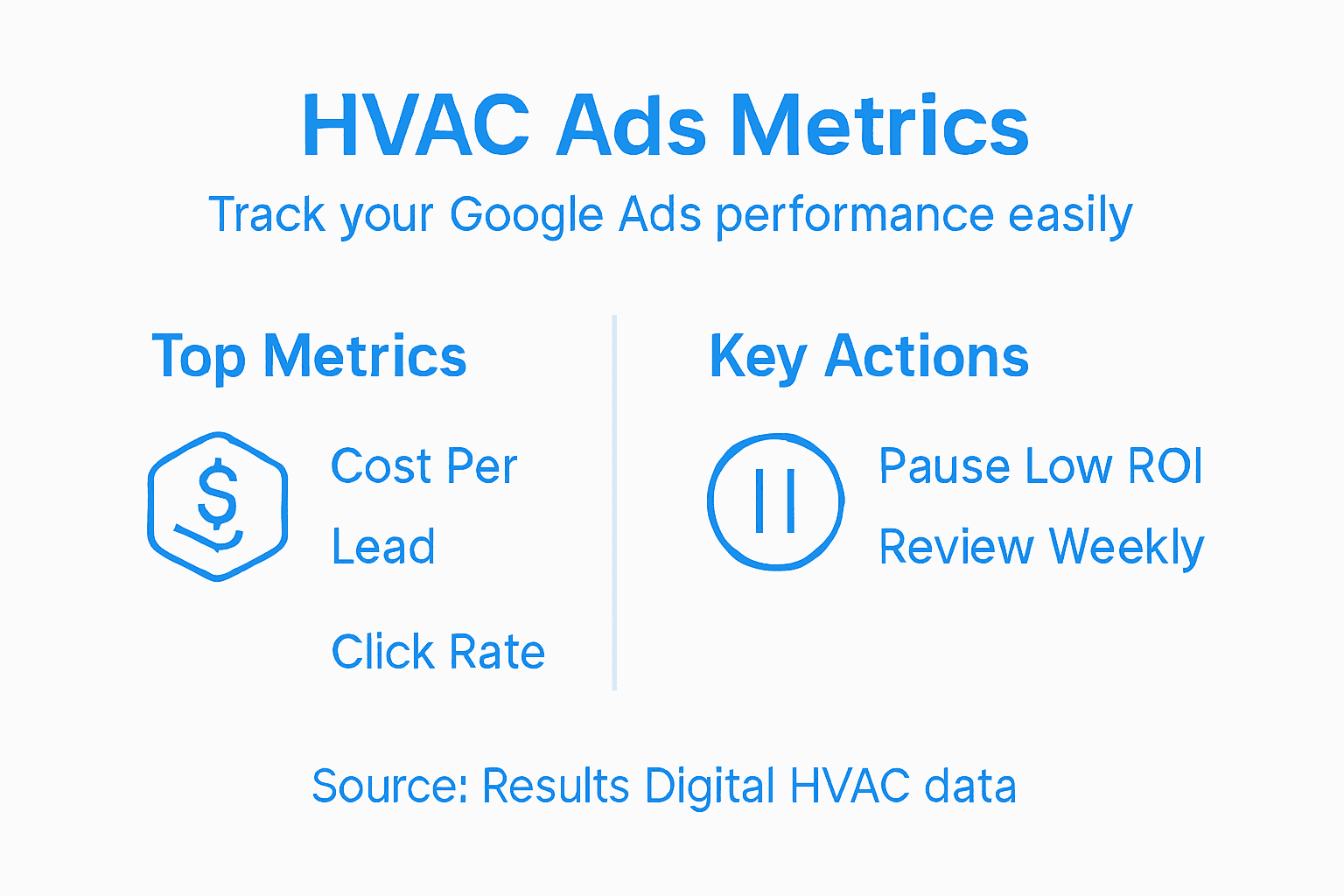
Tracking results requires understanding your numbers cold. You need to know your cost per lead, cost per qualified lead, cost per booked job, and ultimately your cost per dollar earned. Most contractors stop at cost per lead and call it a day. That’s incomplete. A 35-dollar lead is worthless if 80 percent of those leads are price shoppers who never book. A 50-dollar lead that converts to a 1,500-dollar job is gold. Understanding how to measure marketing performance across different campaigns helps you identify which ads and keywords actually move the needle for your business. Set up Google Ads conversion tracking for phone calls, online bookings, and form submissions. Then overlay this data with your actual job data. Track which leads convert to appointments and which appointments convert to paid jobs. This connection between ad clicks and actual revenue is what separates contractors who are guessing from contractors who are winning.
Optimizing for ROI means adjusting your strategy based on what the data shows. If your AC replacement ads convert at 25 percent but your furnace repair ads convert at only 12 percent, shift budget from furnace to AC. If your ads in zip code 12345 bring customers who spend 1,800 dollars per job while zip code 67890 customers spend 900 dollars, increase bids in 12345 and decrease in 67890. If Tuesday and Wednesday produce 40 percent more calls than Monday, your bid strategy should account for that. Google Ads offers automated bidding options like “maximize conversions” or “target cost per lead” that adjust your bids daily based on performance. These tools work best when you feed them quality conversion data. Garbage in, garbage out. Feed Google accurate data about what actually matters (booked jobs, not just clicks), and the algorithm learns to find more of those customers. Feed it click volume with no conversion data, and it just burns your budget chasing quantity over quality.
Pro tip: Review your cost per booked job every Monday morning, then immediately pause or reduce bids on campaigns or keywords that exceed your target number, even if they’re still getting clicks.
Below is a helpful summary of essential Google Ads metrics every HVAC contractor should track:
| Metric Name | What It Measures | Why It’s Important |
|---|---|---|
| Cost per Lead | Ad spend divided by leads | Evaluates advertising efficiency |
| Conversion Rate | Leads divided by clicks | Reveals campaign effectiveness |
| Cost per Booked Job | Spend per job booked | Measures true revenue impact |
| Click-Through Rate | Clicks divided by impressions | Indicates ad relevance |
| Average Job Value | Revenue from booked jobs | Guides budget allocation |
Common Pitfalls and Optimization Strategies
Most contractors sabotage their own Google Ads campaigns without realizing it. The first major pitfall is bidding on too many keywords at once. You open an account, dump 200 keywords into one campaign, set a bid of 5 dollars across the board, and hope something sticks. Nothing sticks. Some keywords are worth 2 dollars per click. Others should be 12 dollars. Lumping them together means you overpay for junk keywords and underbid on winners. Start narrow. Pick 15 to 20 core keywords that directly match your services and customer intent. Let those run for 30 days, see which convert, then expand strategically. The second pitfall is ignoring ad quality. Your ad headline might be “HVAC Services Available” but a customer searching “my furnace is leaking water” needs an ad that says exactly that. Vague, generic headlines waste clicks. Google also scores your ads on relevance, landing page experience, and expected click-through rate. A high-quality ad with a lower bid can outrank a low-quality ad with higher spending. Write ads that speak directly to each keyword’s search intent, not ads that work for every search.
Another costly mistake is not testing enough variations. Many contractors write one ad, launch it, and never touch it again. That ad might be mediocre but they accept it as normal. Best performers test at least two or three ad variations simultaneously. Maybe one headline emphasizes speed (“Same-day HVAC repair”), another emphasizes trust (“Family-owned since 2005”), and a third emphasizes price (“Affordable emergency service”). After 30 days, pause the worst performer and launch a new variation to test against the winner. This continuous testing compounds over time. A campaign that improves by 10 percent each month through testing vastly outperforms a static campaign. Ensuring ads capture attention and clearly convey benefits through strategic messaging optimization separates contractors who scale from contractors who plateau.
The final major pitfall is over-optimizing too early. You launch a campaign and check it obsessively every day. After three days with no conversions, you panic and kill it. Wrong. Google needs time to learn. Most conversion models need at least 50 conversions to optimize effectively. If you have a 5 percent conversion rate and get 100 clicks daily, that takes 10 days just to hit 50 conversions. Constantly changing bids, pausing keywords, and adjusting budgets disrupts Google’s learning algorithm. Launch your campaigns, let them run for 30 days with minimal interference, then analyze the data comprehensively. You’ll identify real patterns instead of noise. The optimization strategies that actually work involve regular but deliberate testing. Run experiments one at a time. Test a new bid strategy for two weeks before moving to the next test. Document what worked and why. Build a system of continuous improvement rather than reactive panic adjusting.
Pro tip: Create a simple spreadsheet tracking your top five metrics (cost per click, click through rate, conversion rate, cost per lead, cost per booked job) and review it monthly instead of daily to avoid making emotional decisions based on short-term noise.
Take Control of Your HVAC Leads with Expert Google Ads Management
Struggling to turn high-intent searches into booked jobs is a challenge every HVAC contractor faces. The article reveals how crucial it is to strategically structure campaigns, target the right geographic areas, and track conversions accurately to avoid wasted ad spend. If you are tired of pouring money into generic keywords or guessing which ads actually bring paying customers, you are not alone. Effective Google Ads for HVAC means mastering keyword research, setting precise bids, and applying continuous optimization to dominate your local market.
Let Results Digital help you win more HVAC leads through a proven approach tailored exclusively for service-based businesses. Our team combines deep industry knowledge with advanced digital marketing techniques to create campaigns that deliver consistent, qualified calls and bookings. Partner with us to leverage custom Google Ads strategies, local SEO, and professional website design that focus on your most profitable services and geographic areas. Stop wasting advertising dollars and start growing your HVAC business with measurable results and no long-term contracts. Visit Results Digital today to discover how our specialized solutions transform clicks into customers.
Frequently Asked Questions
How does Google Ads work for HVAC contractors?
Google Ads is a pay-per-click advertising platform allowing HVAC contractors to create campaigns that appear at the top of search results when potential customers search for relevant services. Advertisers set keywords, write ad copy, and bid on ad placements to capture high-intent leads.
What types of Google Ads campaigns are most effective for HVAC businesses?
The most effective Google Ads campaigns for HVAC contractors include Search campaigns, which target keywords potential customers are actively searching for, Display campaigns for brand awareness, and Local Services ads that showcase trusted services with customer reviews.
How should HVAC contractors structure their Google Ads campaigns?
HVAC contractors should structure their campaigns by separating each service type or geographical area. This organization allows for better management of budgets, ad testing, and targeted messaging for different customer needs, ensuring more effective lead generation.
What can HVAC contractors do to optimize their Google Ads spending?
To optimize their Google Ads spending, HVAC contractors should set individual budgets for various campaigns, utilize keyword bid caps, and implement conversion tracking to measure the effectiveness of their ads and focus spending on high-converting areas.