
Countless HVAC business owners feel frustrated when their phones are quiet, even while neighbors down the street are always busy. In a world where most local customers start their search online, the difference often comes down to who understands and applies effective SEO for contractors. Knowing how search engines really work, and separating lasting strategies from common myths, is the starting point for generating more calls from motivated homeowners in your area.
Table of Contents
- Defining SEO for Contractors and Common Myths
- Types of SEO Strategies for Contractors
- How SEO Boosts Local Visibility and Trust
- Essential Optimization Steps Contractors Need
- Risks, Drawbacks, and Mistakes to Avoid
Key Takeaways
| Point | Details |
|---|---|
| Understanding SEO | SEO is vital for contractors to improve online visibility, focusing on quality content that meets user intent rather than outdated tactics like keyword stuffing. |
| Ongoing Process | Effective SEO is a long-term strategy requiring continuous optimization of content and technical aspects, not a one-time setup. |
| Local Focus | Niche targeting and optimizing for local searches can lead to faster, higher-quality leads compared to competing nationally. |
| Avoid Common Mistakes | Contractors should steer clear of black-hat techniques and maintain consistent business information across all online platforms to avoid penalties and loss of credibility. |
Defining SEO for Contractors and Common Myths
SEO stands for search engine optimization, which is the practice of creating and optimizing relevant, authoritative content to help both visitors and search engine crawlers find answers to their key questions. For contractors, especially HVAC business owners, this means building your website and online presence so that when a homeowner searches for “emergency furnace repair near me” or “air conditioning installation,” your company shows up prominently in Google’s organic search results. Unlike paid advertising where you pay per click, organic search results give you visibility without ongoing advertising costs. The goal is straightforward: increase the volume of quality, relevant traffic to your website, which naturally translates into more qualified leads calling your phone and booking jobs.
Here’s where most contractors get confused about SEO. The first major myth is that SEO is purely about keyword stuffing, or cramming as many service terms as possible into your website text. That approach died years ago and actually hurts your rankings now. Google’s algorithms are far too sophisticated for that tactic. The second common misconception is that SEO delivers results overnight. People want their phones ringing this week, which makes sense from a business standpoint, but SEO is fundamentally a long-term content and website quality improvement strategy. You’re looking at 3 to 6 months before you see meaningful traction, though the payoff compounds over time. Another widespread myth suggests that SEO is purely a technical task handled once and forgotten. In reality, SEO involves ongoing processes including on-page tactics like using relevant keywords naturally within quality content, plus off-page considerations like building links from reputable industry sites and improving how people engage with your website. When you understand that searcher behavior constantly evolves and search algorithms update regularly, you realize SEO requires continuous attention and refinement.
The truth about SEO for contractors is that it combines multiple interconnected elements. On your website itself, you need pages optimized for local searches like “HVAC services in [your city]” with genuine, helpful content that answers questions homeowners actually ask. Off-page, you build credibility through customer reviews, local citations in business directories, and links from relevant industry sources. Technical aspects matter too, like making sure your website loads fast on mobile phones and has a clean structure search engines can easily crawl. Many contractors assume this all sounds complicated and expensive, but effective SEO for local contractors focuses on your specific service area and target customers, not trying to rank nationally. Your competition locally is typically smaller than you think, which means consistent effort pays off faster. The key difference between an HVAC contractor who dominates their local market through search and one who struggles is not luck or special knowledge. It’s simply understanding what SEO actually is, rejecting the myths holding them back, and committing to the process as a core part of business growth.
Pro tip: Start by listing the specific services you offer and the neighborhoods you serve, then build your SEO strategy around those concrete terms rather than generic keywords, since this targeted approach typically generates higher-quality leads faster than broad optimization.
Types of SEO Strategies for Contractors
SEO isn’t one monolithic thing you do once and check off your list. It breaks down into three distinct approaches that work together like different tools in your toolbox. Technical SEO ensures your website’s foundation is solid, making sure search engines can actually crawl through your pages and index them correctly. This includes things like site speed, mobile responsiveness, proper URL structure, and fixing broken links. On-page SEO focuses on the content and elements you control directly on your website, such as optimizing your service page headings, using relevant keywords naturally in your text, crafting compelling meta descriptions that show up in search results, and making sure images are properly tagged. Off-page SEO happens outside your website and builds your credibility and authority through backlinks from other reputable sites, customer reviews, local business citations, and social signals. For HVAC contractors, on-page and off-page SEO strategies work together to improve both your rankings and the quality of leads you attract.
Let’s talk about what each strategy actually looks like in practice for your HVAC business. On-page SEO means when someone searches “furnace maintenance in Denver,” your website has a page specifically about furnace maintenance in Denver with genuine, helpful information about what homeowners should expect, how often they need service, and why it matters. You use that exact phrase naturally in your headings and content, but you’re not forcing it awkwardly. You answer real questions people ask about furnace maintenance. Off-page SEO builds your reputation through multiple channels. Customer reviews on Google and Facebook signal to search engines that your business is trustworthy and popular. Local business listings in directories like Yelp and the Better Business Bureau tell Google you’re a legitimate local contractor. When industry publications or HVAC supply companies link to your website, you gain authority. Technical SEO ensures all this good work doesn’t get lost because your website takes 10 seconds to load or doesn’t work on mobile phones. A homeowner searching for emergency repair on their phone won’t wait around for a slow site to load. A balanced SEO approach that touches all three areas gives you the best chance to dominate local search results and attract the right customers.
Here’s what makes this approach powerful for local contractors specifically. Unlike national companies trying to rank for “HVAC services” across the entire country, you’re competing locally, which means fewer competitors fighting for attention. You focus your on-page content on your specific service area and neighborhoods. Your off-page efforts emphasize local reviews and citations from people and organizations in your community. Your technical optimization ensures mobile visitors can book appointments easily. This tailored approach means you’re not trying to be everything to everyone. You’re being the obvious choice for heating and cooling emergencies in your specific area. Many contractors waste money trying to rank for overly broad terms where massive national companies dominate. Instead, owning your local market through a comprehensive SEO strategy that combines technical excellence, smart on-page optimization, and strategic off-page authority building creates a competitive moat that brings consistent leads month after month.
Here’s a quick comparison of the main types of SEO approaches relevant for contractors:
| SEO Type | Main Focus | Business Benefit | Key Example |
|---|---|---|---|
| Technical SEO | Website structure & speed | Better rankings & user experience | Fast mobile site loading |
| On-page SEO | Content & keywords | Attracts local search traffic | Local service page optimization |
| Off-page SEO | Backlinks & reviews | Builds authority & trust | Earning Google reviews |
Pro tip: Audit your website’s mobile experience first since over 70 percent of HVAC emergency searches happen on phones, then tackle your most important service pages with on-page optimization targeting local keywords before investing heavily in off-page tactics like link building.
How SEO Boosts Local Visibility and Trust
When a homeowner’s furnace stops working at 11 p.m. on a freezing night, they pull out their phone and search “emergency HVAC repair near me.” That moment right there is where SEO wins or loses you the job. If your HVAC business shows up prominently in Google Maps and the organic search results, you’re getting the call. If you’re buried on page three because you haven’t invested in SEO, a competitor is getting that call instead. Local SEO optimizes your online presence to appear exactly when and where nearby customers are actively searching for your services. This includes managing your Google My Business profile, building local citations in business directories, encouraging customer reviews, and creating content specifically for your service area. When done well, local SEO doesn’t just increase visibility. It also builds instant credibility because customers see you showing up alongside positive reviews, your business information is consistent everywhere online, and you clearly serve their specific neighborhood.

The trust-building aspect of SEO works in multiple ways simultaneously. First, appearing in local search results itself signals legitimacy. Google doesn’t show just any business that claims to do HVAC work. It shows businesses that have optimized their presence properly and earned positive signals through reviews and citations. When a homeowner sees your business in Maps with a 4.8 star rating and 47 reviews, they immediately trust you more than an unknown competitor with no reviews. Second, positive reviews and quality content boost credibility because they prove you deliver results and solve real problems. A customer who reads five detailed reviews from neighbors describing how you fixed their heating system builds confidence before they even call. Third, appearing consistently across Google Maps, your website, Yelp, the Better Business Bureau, and local directories tells customers you’re established and professional. Inconsistent or missing information creates doubt. When everything aligns, trust follows naturally. The psychological effect matters tremendously. A homeowner choosing between two HVAC companies will pick the one that appears everywhere with consistent information and positive reviews almost every time.
Here’s the conversion impact that makes SEO financially worthwhile for your HVAC business. When you rank locally for relevant keywords, the leads you attract are already primed to buy. They’ve already decided they need your service. They’re not browsing casually. They’re actively searching for someone to fix their problem right now. These highly qualified leads convert at much higher rates than cold advertising calls because they’ve self-identified their need. Your website also becomes a trust builder before the phone call happens. When someone clicks through to your site from a local search result, they see your service areas, read customer testimonials, and verify you’re licensed and insured. By the time they call, they’re already mentally committed. You’re not cold-calling strangers trying to convince them they need your services. You’re responding to someone who already knows they have a problem and has chosen you as a candidate to solve it. This difference shows up directly in your booking rate and job revenue. Many contractors report that SEO-generated leads close at double or triple the rate of other lead sources because of this built-in intent and trust foundation.
Pro tip: Focus first on getting reviews from your best customers through follow-up emails and SMS messages after completed jobs, since positive reviews are the fastest trust builder for local SEO and directly impact both your search rankings and customer conversion rates.
Essential Optimization Steps Contractors Need
SEO isn’t overwhelming if you break it into concrete, actionable steps. Start with keyword research because you need to understand what terms your local customers actually use when searching for your services. An HVAC contractor in Phoenix might think everyone searches for “air conditioning repair,” but local data might show that “AC not cooling” or “emergency AC service Phoenix” drives more actual searches. Use Google’s search suggestions, check what competitors rank for, and talk to your team about the exact phrases customers use when calling. Once you know your target keywords, focus on your website’s foundation. Create unique page titles and meta descriptions for every important page, especially your service pages. The page title is what shows up in search results, and the meta description is the preview text below it. These need to include your keyword naturally while accurately describing what the page contains. For example, a furnace maintenance page might have the title “Furnace Maintenance in Phoenix, Arizona” and a description explaining what your maintenance service includes and why homeowners need it. Proper on-page optimization through titles, headings, and structured content helps search engines understand your pages and display them to the right people.
Next comes content quality and site structure. Your website’s organization matters tremendously. Use clear heading tags starting with H1 for your main page title, then H2 and H3 for subsections. This hierarchy helps search engines understand your content and improves readability for visitors. Write content that answers real questions your customers have. If homeowners frequently ask whether they need annual furnace maintenance, create a page answering that question thoroughly. Include your keyword naturally, but write for humans first and search engines second. Poor quality content with forced keywords will frustrate visitors and hurt your rankings. Optimize your images by using descriptive filenames and alt text, because search engines can’t see images the way humans do. An image named “photo.jpg” tells Google nothing, but “hvac-furnace-inspection-phoenix.jpg” with alt text “HVAC technician performing furnace inspection in Phoenix” provides context. Make your website mobile-friendly because over 70 percent of searches happen on phones. Google prioritizes mobile-responsive sites in rankings, and homeowners won’t stay on a site that’s impossible to use on their phone anyway.
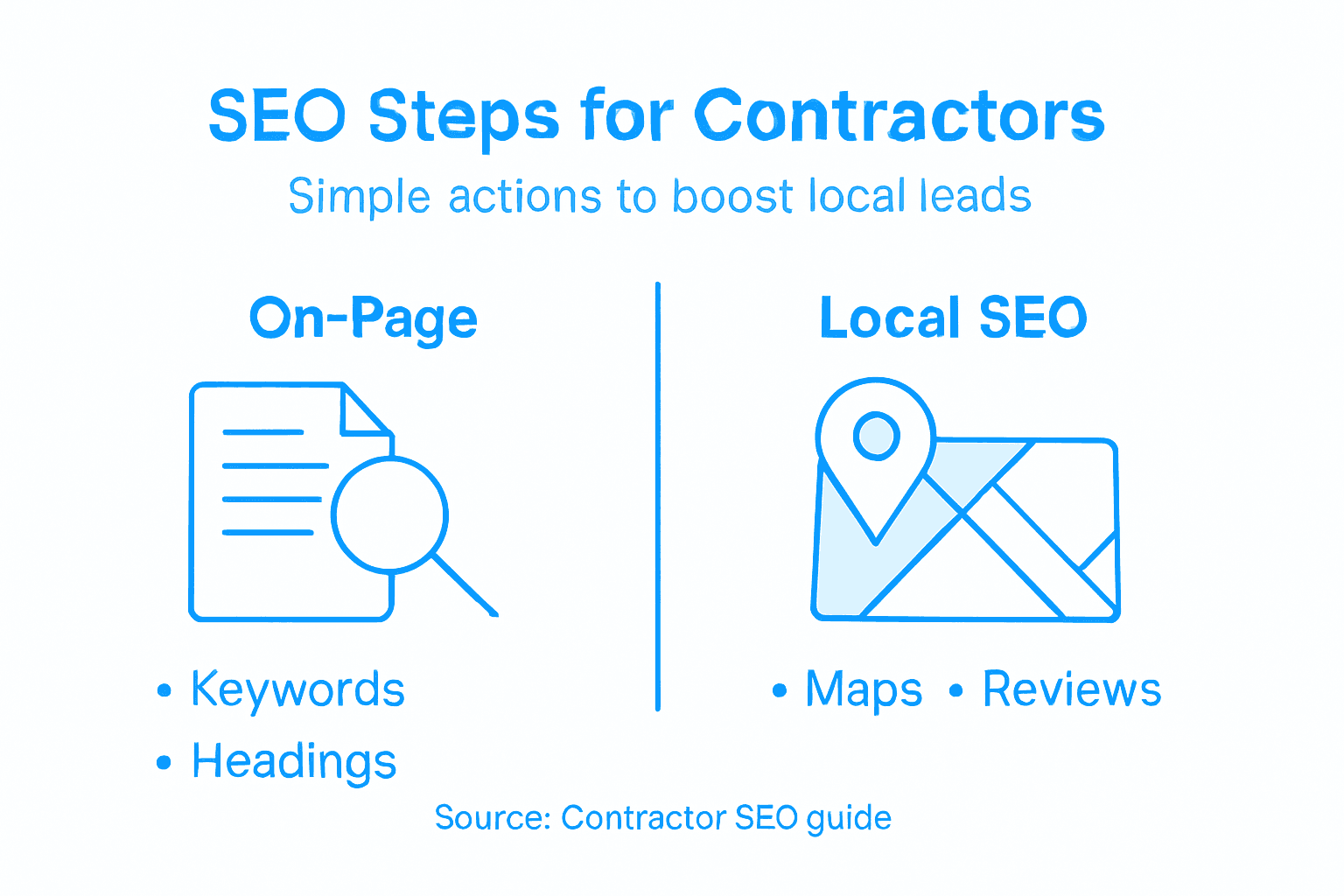
Local optimization requires specific attention for contractors competing in their service area. Claim and optimize your Google My Business profile with accurate business information, service areas, photos of your team and work, and regular posts about special offers or seasonal services. This profile is the gateway to appearing in Google Maps and local search results. Build local citations by ensuring your business information appears consistently across directories like Yelp, the Better Business Bureau, Angie’s List, and industry-specific sites. Consistency matters enormously. If your phone number differs between your website and Yelp, that confusion hurts your rankings. Encourage satisfied customers to leave reviews because positive reviews directly impact both rankings and customer trust. Make it easy by sending follow-up emails or SMS messages after jobs are completed with a link to your Google and Facebook review pages. Monitor your site’s performance using analytics tools and keyword monitoring to see what’s working and what needs adjustment. If certain keywords aren’t driving traffic, adjust your content. If particular pages have high bounce rates, improve the user experience. SEO is iterative, not set-it-and-forget-it. Regular monitoring and adjustments based on actual data separate contractors who maintain strong local visibility from those who fall behind as competition increases.
Pro tip: Prioritize Google My Business optimization first since it drives the fastest local visibility results, then tackle your top five service pages with keyword-optimized titles and descriptions before investing time in extensive content creation.
Risks, Drawbacks, and Mistakes to Avoid
SEO isn’t a shortcut to overnight success, and cutting corners with unethical tactics will destroy your business faster than no SEO at all. The biggest mistake contractors make is falling for quick-fix promises from agencies offering to rank you first in Google within 30 days for $99 per month. That’s not how SEO works, and anyone promising it is either lying or planning to use tactics that will get your website penalized. Black-hat SEO techniques like buying links, hiding text on your pages, cloaking content to show different things to search engines versus visitors, or keyword stuffing might boost rankings temporarily, but Google eventually catches these manipulations and punishes them harshly. When your site gets penalized, you don’t just drop a few spots. Your entire domain can be deindexed, meaning Google removes you from search results completely. Recovery takes months even after you fix the problems. The temptation exists because legitimate SEO takes time and consistent effort. You won’t see significant results for 3 to 6 months. But that timeframe is real, and any agency claiming otherwise is selling snake oil.
Another critical mistake is neglecting your website’s technical foundation and user experience. Common SEO mistakes include poor site speed, mobile usability problems, and ignoring security. If your website takes 8 seconds to load, you’ve already lost the customer. They clicked your link from a search result expecting quick answers, and they bounced to a competitor’s faster site. Google knows this, which is why site speed is a ranking factor. Mobile optimization isn’t optional anymore. Over 70 percent of HVAC searches happen on mobile phones, and if your site doesn’t work smoothly on phones, Google ranks it lower and customers leave frustrated. Securing your site with HTTPS instead of HTTP tells both Google and customers that you take security seriously. Contractors often overlook this technical foundation because it’s not visible like content is, but it directly impacts rankings and conversions. Inconsistent business information across local listings creates another major problem. If your Google My Business profile lists your phone as 555-1234 but your Yelp page says 555-1235, Google gets confused and trust erodes. Customers trying to reach you might call the wrong number. Fixing consistency issues across dozens of directory listings is tedious, which is why contractors skip it. But that inconsistency costs you rankings and lost business opportunities.
Overfocusing on search engines while ignoring actual visitor experience is the underlying problem with most SEO mistakes. You could write a page stuffed with your target keywords that technically ranks well but provides no real value to someone reading it. That visitor leaves immediately without calling you, without booking a job. Meanwhile, a competitor’s page with fewer keywords but actually helpful information converts that visitor into a customer. Over-optimization for search engines instead of users backfires every time because Google’s algorithms are now sophisticated enough to reward content that genuinely helps people. Expecting immediate results is also problematic. Business owners naturally want fast returns on investment. SEO requires patience and ongoing maintenance. You can’t build it once and coast. Search algorithms update regularly. Competitors optimize their own sites. Customer search behavior evolves. If you optimize your site and then ignore it for a year while competitors stay active, they’ll eventually pass you. Many contractors start an SEO effort, see slow early results, get frustrated, and quit right before momentum builds. The ones who succeed view SEO as a permanent part of their marketing strategy, not a one-time project.
Below is a summary of critical SEO mistakes local contractors should avoid:
| Mistake Type | Description | Negative Impact |
|---|---|---|
| Black-hat tactics | Using manipulative SEO techniques | Website penalty or deindexing |
| Technical negligence | Ignoring site speed or mobile use | Loss of traffic and leads |
| Inconsistent listings | Mismatched business info online | Lower trust and rankings |
Pro tip: Before hiring an SEO agency, ask for case studies showing specific results from similar contractors in your area, request a timeline of 3 to 6 months for meaningful results, and run away from any agency promising top rankings in 30 days or guaranteeing rankings to anyone.
Unlock Your HVAC Business Potential with Proven Local SEO and Lead Generation
The article highlights that many contractors struggle with understanding SEO as a long-term, ongoing process involving technical, on-page, and off-page strategies to unlock consistent, high-quality local leads. If you are tired of slow growth from confusing SEO myths or overwhelmed by managing your digital presence, you are not alone. Contractors like you need a partner who delivers measurable results without empty promises or black-hat tactics. At Results Digital, we specialize in helping local service-based businesses dominate their markets through tailored strategies that combine expertly designed websites, targeted local SEO, and powerful online advertising campaigns.
Get ahead now with a dedicated team focused exclusively on trades and service industries. We understand your need to generate real calls and booked jobs from homeowners actively searching for HVAC services in your area. Our exclusive partnership model means we work for your success alone within your market, ensuring a conflict-free strategy that builds trust and drives growth. Don’t wait months stuck on page three. Visit Results Digital to learn how our proven approach can transform your online visibility into a steady stream of qualified leads and business opportunities.
Frequently Asked Questions
What is SEO and why is it important for contractors?
SEO, or search engine optimization, is the practice of creating and optimizing content to help both visitors and search engines find information. For contractors, implementing SEO correctly can lead to increased local visibility, quality traffic, and qualified leads without the ongoing costs of paid advertising.
How long does it take to see results from SEO efforts?
SEO is a long-term strategy that typically takes 3 to 6 months to yield meaningful results. Unlike paid ads, which generate immediate visibility, organic search rankings take time to build and improve.
What are the main types of SEO strategies contractors should focus on?
The three main types of SEO strategies are technical SEO, on-page SEO, and off-page SEO. Technical SEO ensures your website is easily crawlable, on-page SEO involves optimizing your content and website elements, and off-page SEO focuses on building authority through backlinks and reviews.
How can contractors improve their local SEO presence?
Contractors can enhance their local SEO by optimizing their Google My Business profile, building local citations, encouraging customer reviews, and creating content that targets specific service areas and local keywords.
Recommended
- What Is Lead Generation for Local Contractors
- Local Advertising Explained: Winning Leads for Contractors
- Digital Marketing – Why It Matters for Local Contractors
- Lead Generation Workflow 2025 for Local Contractors
- Digital Markteting for Roofing Companies
- Digital Marketing for Fire Protection Companies
- Digital Marketing for Damage Restoration Companies
- Digital Marketing for Asbestos Abatement Companies
