
Many roofing contractors wonder why their websites are not generating the leads they expect despite solid local reputations. In today’s online market, understanding how your site performs compared to others in the United States is vital for growth. By focusing on current roofing site performance, you will lay a foundation for smarter digital strategies that target measurable improvements and attract more potential customers in your area.
Table of Contents
- Step 1: Assess Current Roofing Site Performance
- Step 2: Refine Local SEO Elements For Roofing Keywords
- Step 3: Optimize Website Content For Lead Conversions
- Step 4: Integrate Targeted Digital Advertising Solutions
- Step 5: Verify Site Improvements With Tracking And Reports
Quick Summary
| Key Point | Explanation |
|---|---|
| 1. Assess Your Current Performance | Use tools like Google Analytics to gauge traffic, bounce rate, and conversions for an accurate baseline. |
| 2. Optimize Local SEO for Your Keywords | Target specific service and geographic keywords to appear in local search results effectively. |
| 3. Create Engaging Website Content | Develop content that answers customer questions and encourages leads with clear calls to action. |
| 4. Implement Targeted Advertising | Use Google Ads and social media to reach potential customers actively searching or interested in roofing services. |
| 5. Track Changes and Measure Improvements | Regularly review analytics to ensure optimizations yield better leads and conversion rates against your baseline. |
Step 1: Assess current roofing site performance
Before you can improve your roofing website’s ability to generate leads, you need a clear picture of where it stands right now. This assessment becomes your baseline, the starting point from which all your optimization efforts will measure success. Without understanding your current performance, you’re essentially working blind.
Start by checking your website traffic using Google Analytics. Look at how many visitors arrive each month, where they come from, and which pages they spend the most time on. Are people landing on your homepage and bouncing immediately, or are they exploring service pages? Track metrics like bounce rate (the percentage of visitors who leave without taking action) and average session duration. These numbers tell you whether your site is compelling enough to keep potential customers engaged.
Next, examine your conversion metrics closely. How many phone calls, form submissions, or estimate requests does your site generate each month? This data matters more than raw traffic numbers because a site generating 500 leads per month outperforms one receiving 5,000 disinterested visitors. Compare your conversion rate against roofing industry performance metrics to understand where you stand competitively in your market.
Don’t forget to evaluate your search visibility. Search for your primary roofing keywords like “roof repair near [your city]” or “new roof installation [your area]” and note where your site appears in the results. Are you on the first page, or buried deep in the rankings? Use tools like Google Search Console to see which keywords currently drive traffic to your site and which ones show potential but need improvement.
Finally, audit your website’s technical health. Check page load speed, mobile responsiveness, and overall user experience. A slow site that doesn’t work well on phones will hemorrhage leads no matter how good your content is. These foundational issues often go unnoticed but directly impact both search rankings and visitor behavior.
Pro tip: Document everything you find in a spreadsheet with dates and specific metrics so you can track improvement month over month and identify which optimization changes actually move the needle.
Here’s an overview of key website metrics and how they impact roofing lead generation:
| Metric | What It Measures | Business Impact | Optimization Tips |
|---|---|---|---|
| Traffic Volume | Number of monthly visitors | Indicates visibility | Use SEO and ads to increase |
| Bounce Rate | Visitors leaving without action | Shows engagement level | Improve page content/design |
| Session Duration | Average time spent on site | Reflects visitor interest | Add engaging, useful content |
| Conversion Rate | Visitors who become leads | Direct impact on revenue | Use strong calls to action |
| Page Speed | Load time for web pages | Affects rankings and user experience | Optimize images and code |
Step 2: Refine local SEO elements for roofing keywords
Now that you understand your current performance, it’s time to optimize the elements that search engines use to rank your roofing website. Local SEO focuses specifically on making your business visible when potential customers search for roofing services in your area. This means targeting keywords that include geographic modifiers and service descriptions that match your actual business.
Start by identifying the right keywords for your market. Think about how homeowners actually search for roofing services. They typically search phrases like “roof repair in Denver” or “emergency roofer near me,” not just “roofing company.” Use keyword research processes to find terms that combine your services with your location. Tools like Google Keyword Planner and Semrush show search volume and competition levels for these phrases. Aim for keywords with moderate search volume and lower competition where you can realistically rank on the first page.
Once you have your keyword list, optimize your website’s on-page elements. This includes your page titles, meta descriptions, and heading tags. Your main service pages should target specific keywords, so your roof repair page targets “roof repair,” your replacement page targets “new roof installation,” and so on. Each geographic area you serve should have its own optimized landing page if possible. Local search engine optimization requires this geographic specificity to compete effectively in local results.

Don’t overlook your Google My Business profile. This is critical for local SEO success. Fill out every field completely, add photos of your work, encourage customer reviews, and keep your business information accurate and consistent. Your business name, address, and phone number should match exactly across your website, Google My Business, and every other citation.
Finally, ensure your local citations are consistent. Local citations are online listings of your business information on directories, review sites, and industry databases. Inconsistent information confuses search engines and hurts your rankings. Audit sites like Yelp, Home Advisor, Angie’s List, and local directories to make sure your details match everywhere.
Pro tip: Create a spreadsheet tracking every citation of your business online, then systematically update any that have incorrect phone numbers, addresses, or service descriptions to maintain consistency across the web.
Step 3: Optimize website content for lead conversions
Content is where your website either wins customers or loses them to competitors. The right content answers questions homeowners are asking, builds trust in your expertise, and guides visitors toward taking action like calling or requesting an estimate. This step focuses on creating and refining content that actually converts browsers into leads.
Start by understanding what your potential customers need to know before they call. Homeowners researching roof repair want to know costs, timelines, and whether their issue requires repair or replacement. Those seeking insurance claims help need to understand your process for working with adjusters. Create detailed service pages that address these specific concerns. Include information about your experience, certifications, warranties, and past projects. Publishing relevant, authoritative content targeting your specific services builds credibility and engages visitors who are ready to become leads.
Make sure your content is easy to read and scannable. Most homeowners won’t read long paragraphs. Use short headings, bullet points, and white space to break up information. Include before and after photos of your work. Videos showing your team working or explaining common roofing issues perform exceptionally well. The goal is to keep visitors on your site long enough to build confidence in your business.
Optimize your website’s performance because slow pages drive people away. Optimizing page load speed and overall performance reduces bounce rates and improves how many visitors actually submit leads. Test your site on mobile devices since most searches happen on phones. A site that’s slow or difficult to navigate on mobile will hemorrhage potential customers.
Finally, make your call to action impossible to miss. Every page should have a clear way for visitors to contact you, whether that’s a phone number, contact form, or chat widget. Don’t make people hunt for your phone number or search for how to request an estimate. Place contact options prominently above the fold and repeat them throughout the page.
Pro tip: Add trust signals like customer testimonials, Google reviews, licensing badges, and years in business prominently on your homepage and service pages since homeowners need reassurance before calling a contractor they found online.
Step 4: Integrate targeted digital advertising solutions
Organic traffic from SEO takes time to build. While you’re optimizing your website, paid advertising can immediately put your roofing business in front of homeowners actively searching for your services. This step focuses on launching advertising campaigns that reach the right people at the right time.
Start with Google Ads since homeowners searching for roofing services often use Google to find local contractors. When someone types “emergency roof repair near me” or “how much does a new roof cost,” your ads appear at the top of search results. Set up campaigns targeting your service area and the keywords you identified earlier. Targeted digital advertising mechanisms work by showing ads to people actively seeking what you offer, which delivers higher quality leads than broad advertising approaches.
Next, layer in Facebook and Instagram advertising to reach homeowners who may not be actively searching yet. Interest-based and contextual advertising allows you to target people based on their home ownership status, recent moves, or interest in home improvement topics. These ads build awareness and remind homeowners about your business when they’re considering repairs or replacements.
Set clear budgets for each platform and track which channels deliver the best leads. Not all advertising money converts equally. A lead from Google Ads might be more qualified than one from a Facebook ad because the person is actively searching for your service. Monitor your cost per lead and adjust your spending accordingly.
Make sure your ads send traffic to optimized landing pages, not just your homepage. A person clicking an ad for roof repair should land on your roof repair page with relevant information, not have to search your site for it. This improves conversion rates and gives visitors exactly what they’re looking for.
Pro tip: Test different ad copy, images, and landing pages simultaneously so you can identify which combinations generate the most qualified leads at the lowest cost, then double down on winners.
To help you decide where to focus advertising efforts, compare key digital ad platforms for roofing businesses:
| Platform | Targeting Strengths | Typical Lead Quality | Recommended Use Case |
|---|---|---|---|
| Google Ads | Search intent, location | High, ready to buy | Direct lead generation |
| Facebook Ads | Demographics, interests | Medium, nurturing leads | Brand awareness campaigns |
| Instagram Ads | Visual engagement, local | Medium, drives inquiries | Showcase completed projects |
Step 5: Verify site improvements with tracking and reports
You’ve implemented changes to your roofing website. Now comes the critical part: measuring whether those changes actually work. Without proper tracking and reporting, you’re guessing at what’s helping your lead generation and what’s wasting your time. This step ensures you understand the impact of every optimization.
Set up comprehensive tracking across all your digital channels. Google Analytics tracks website traffic and visitor behavior. Google Ads tracks which ads generate clicks and conversions. Your phone system should track incoming calls by source. Contact forms should identify where visitors came from. Each piece of data tells part of the story about what’s driving leads to your business.
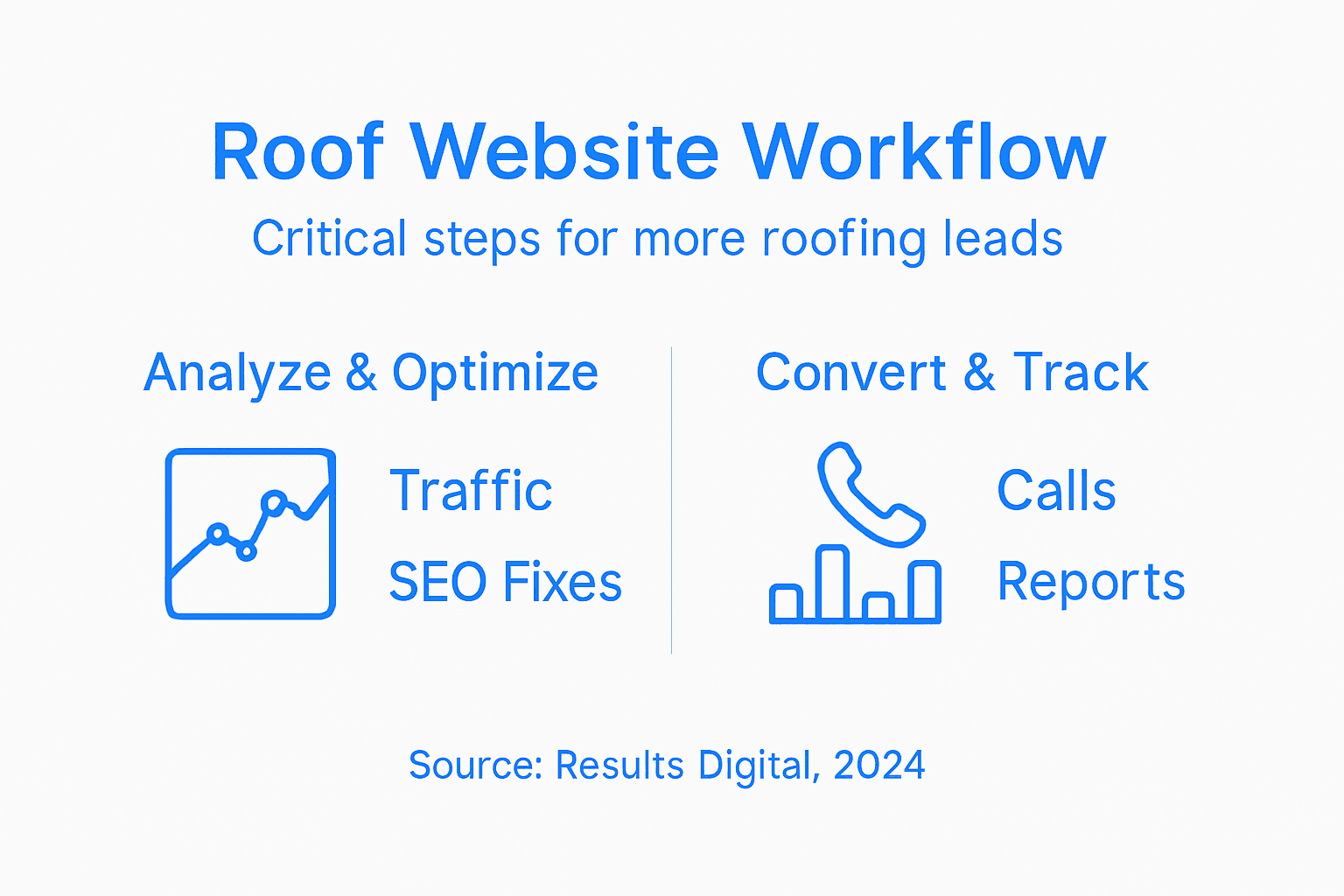
Create a monthly reporting system that pulls all this data together. Clear communication of evaluation findings ensures you actually use the data to improve your business. Pull numbers like total website visitors, leads generated, cost per lead, and conversion rates. Compare these metrics to your baseline from Step 1. Are you getting more leads? Are they higher quality? Is your cost per lead decreasing?
Look for patterns in the data. Which roofing keywords drive the most qualified leads? Which advertising platform delivers leads at the lowest cost? Which service pages get the most engagement? These insights show you where to double down and where to adjust your strategy. Detailed reports with clear analysis help you identify what’s working and what needs improvement.
Don’t just collect data in isolation. Track how changes you made correlate with improvements. If you optimized your roof repair page in June and leads increased in July, that’s a direct connection. If you launched a Facebook ad campaign and your cost per lead decreased, you’ve proven the value of that platform.
Share your results with your team or marketing partner regularly. Monthly reviews keep everyone aligned on what’s working and what needs adjustment. This accountability drives continuous improvement.
Pro tip: Set up automated monthly reports that email you key metrics so you never miss performance trends, and establish a rule to test one new optimization per month while measuring its impact against your baseline.
Accelerate Your Roofing Leads with Expert Website Optimization
Struggling to turn your roofing website traffic into real, high-quality leads is a challenge many local contractors face. This article highlights how essential it is to assess your current site performance, refine local SEO, create compelling content, and leverage targeted advertising to dominate your local market. If you find tracking improvements and converting visitors into booked jobs overwhelming, you are not alone. Results Digital specializes in providing custom website design, local SEO, and precision Google Ads and Facebook Ads tailored exclusively for service professionals like you.
We understand the importance of measurable results without long-term contracts and the confidence that comes from exclusive industry partnerships. Our veteran-owned agency emphasizes transparency through detailed reporting so you never work in the dark. Don’t settle for guesswork when optimizing your roofing website. Let us help you boost your conversion rates with data-driven strategies designed to increase calls, form submissions, and estimate requests.
Ready to stop losing leads due to slow sites, unclear calls to action, or poor search ranking? Visit Results Digital today to discover how our specialized team can implement proven techniques—from local SEO to targeted digital advertising—to turn your roofing website into a powerful lead-generation engine. Take the next step to dominate your local market now by exploring our custom website design solutions and start seeing real growth in your booked jobs and customer calls.
Frequently Asked Questions
How can I assess my roofing website’s current performance?
To assess your roofing website’s performance, use Google Analytics to check your monthly traffic, bounce rate, conversion metrics, and session duration. Track this data to establish a baseline, enabling you to measure improvements more effectively in the future.
What local SEO elements should I optimize for my roofing website?
You should focus on optimizing page titles, meta descriptions, and heading tags with relevant roofing keywords that include your geographical area. Create unique landing pages for different services and ensure your Google My Business profile is completely filled out with consistent information.
How can I create content that converts visitors into leads for my roofing business?
To create effective content, address the common concerns of potential customers, such as costs and timelines for roofing projects. Use engaging formats like videos and images, and ensure your call to action is prominent on each page to encourage visitors to contact you.
What digital advertising options should I consider for promoting my roofing services?
Start with Google Ads to reach actively searching customers and layer in Facebook Ads to generate awareness among potential leads who may not be actively searching. Set clear budgets and monitor metrics to adjust your campaigns for the best return on investment.
How do I track and report on the effectiveness of my roofing website optimization?
Set up comprehensive tracking for your website, ads, and incoming leads to gather valuable data on performance. Create monthly reports to compare these metrics against your initial baseline, helping you identify trends and adjust your strategy for continuous improvement.
