
Every HVAC business owner in the United States knows how competitive the local market can be when it comes to attracting new customers online. Getting the most out of your Google Ads setup means more than just throwing money at digital ads. When you define your local service area and use precise audience targeting strategies, your campaigns become focused and cost-effective. This guide breaks down how to sharpen your Google Ads process from the ground up so you can turn clicks into qualified leads and real bookings.
Table of Contents
- Step 1: Define Target Local Service Area And Audience
- Step 2: Create Optimized Google Ads Account And Campaign
- Step 3: Design Compelling Ad Creatives And Landing Pages
- Step 4: Set Up Lead Tracking And Conversion Measurement
- Step 5: Monitor Results And Refine Campaign Settings
Quick Summary
| Key Point | Explanation |
|---|---|
| 1. Define Your Service Area | Clearly map out your operational boundaries to focus your marketing efforts effectively within a 30-50 mile radius. |
| 2. Optimize Google Ads Setup | Create targeted ad groups with specific keywords and set up conversion tracking to monitor performance efficiently. |
| 3. Design Compelling Landing Pages | Use clear headlines and professional imagery to turn interested clicks into HVAC leads with strong calls to action. |
| 4. Implement Comprehensive Lead Tracking | Set up multiple conversion tracking methods, including phone calls and form submissions, to gain insights into customer interactions. |
| 5. Monitor and Refine Campaigns Regularly | Analyze campaign metrics frequently and make data-driven adjustments to improve lead generation effectiveness over time. |
Step 1: Define target local service area and audience
Successfully generating HVAC leads starts with precisely defining your local service area and target audience. This crucial first step ensures your marketing efforts are laser-focused and efficient.
Begin by mapping out your geographic service boundaries based on realistic driving distances and operational capabilities. Most HVAC contractors effectively serve a 30-50 mile radius around their primary business location. When determining this area, consider factors like:
- Population density
- Average travel time for service calls
- Competition in surrounding zones
- Your team’s current capacity
To pinpoint your ideal audience, leverage demographic targeting strategies that help you understand potential customers. This means analyzing characteristics such as homeownership status, household income, property age, and specific HVAC service needs. Residential segments might include:
- Homeowners aged 35-65
- Middle to upper-income households
- Owners of homes built before 2000
- Neighborhoods with older heating and cooling systems
Precise audience definition transforms generic marketing into targeted lead generation.
Utilize local census data, property records, and market research to refine your understanding of potential customers within your service area. The more granular your audience profile, the more effectively you can customize your advertising messaging and targeting.

Pro tip: Create a detailed customer persona document that captures your ideal client’s demographics, pain points, and preferences to guide your entire marketing strategy.
Step 2: Create optimized Google Ads account and campaign
Setting up a high-performance Google Ads account is critical for generating consistent HVAC leads. Your goal is to create a strategic campaign that targets the right customers in your local service area with precision and efficiency.
Start by navigating to Google Ads and creating a new account specifically for your HVAC business. Focus on Google Ads campaign optimization strategies that align with your lead generation objectives. Your initial setup should include:
- Selecting “Leads” as your primary campaign objective
- Setting up conversion tracking for website form submissions
- Configuring geographical targeting within your service radius
- Establishing a realistic daily budget
Develop ad groups with specific keyword themes related to HVAC services. These might include:
- Emergency HVAC repair
- AC installation
- Heating system maintenance
- Commercial HVAC services
Precise targeting transforms generic advertising into a lead generation machine.
Ensure each ad group contains tightly related keywords and compelling ad copy that speaks directly to potential customers’ needs. Implement location-based bid adjustments to maximize visibility in your most profitable neighborhoods.
Pro tip: Link your Google Analytics account to track deeper performance metrics and continuously refine your targeting strategy for maximum lead generation efficiency.
Here’s a quick summary of essential Google Ads campaign elements for HVAC lead generation:
| Element | Purpose | Business Impact |
|---|---|---|
| Conversion Tracking | Monitor actions like calls and forms | Optimize ad spend and targeting |
| Geographical Targeting | Focus ads on local service area | Increase relevant lead volume |
| Daily Budget | Control advertising spend | Prevent overspending |
| Keyword Grouping | Group related service keywords | Improve ad relevance and quality |
| Bid Adjustments | Prioritize top neighborhoods | Maximize return on investment |
Step 3: Design compelling ad creatives and landing pages
Crafting persuasive ad creatives and landing pages is the critical bridge between attracting potential customers and converting them into actual HVAC leads. Your visual and written content must immediately communicate value, trust, and solutions for homeowners seeking heating and cooling services.
Begin by developing HVAC landing page design strategies that speak directly to your target audience’s pain points. Your ad creatives and landing pages should work together seamlessly, featuring consistent messaging and visual elements. Key components include:
- Clear, benefit-driven headlines
- Professional service imagery
- Prominent contact information
- Customer testimonial snippets
- Trust badges and certifications
Create compelling visual narratives that showcase your HVAC expertise. Use high-quality images demonstrating:
- Technicians in professional uniforms
- Before and after service transformations
- Modern HVAC equipment installations
- Clean, well-organized work environments
Your landing page is the digital storefront of your HVAC business – make every pixel count.
Ensure mobile responsiveness and fast loading speeds to prevent potential customers from bouncing away. Include clear, action-oriented call-to-action buttons that stand out and guide visitors toward scheduling a consultation or requesting a quote.
Pro tip: A/B test your landing page designs by creating multiple versions and tracking conversion rates to continuously optimize your lead generation performance.
Step 4: Set up lead tracking and conversion measurement
Tracking leads and measuring conversions is the critical nerve center of your HVAC marketing strategy. Without precise measurement, you’re essentially throwing marketing dollars into a black hole.
Begin by configuring comprehensive conversion tracking that captures every potential customer interaction. Your tracking setup should comprehensively monitor multiple conversion types unique to HVAC businesses:
- Phone call tracking
- Website form submissions
- Consultation request completions
- Instant chat interactions
- Booking confirmation events
Create unique conversion tracking tags for different customer touchpoints. This means generating specific tracking codes for:
- Emergency repair requests
- Seasonal maintenance inquiries
- Equipment replacement quotes
- Commercial service consultations
Precise conversion tracking transforms data into actionable business intelligence.
Implement Google Analytics and Google Tag Manager to provide deeper insights into user behavior. Configure goal tracking that reveals not just how many leads you generate, but the quality and source of those leads.
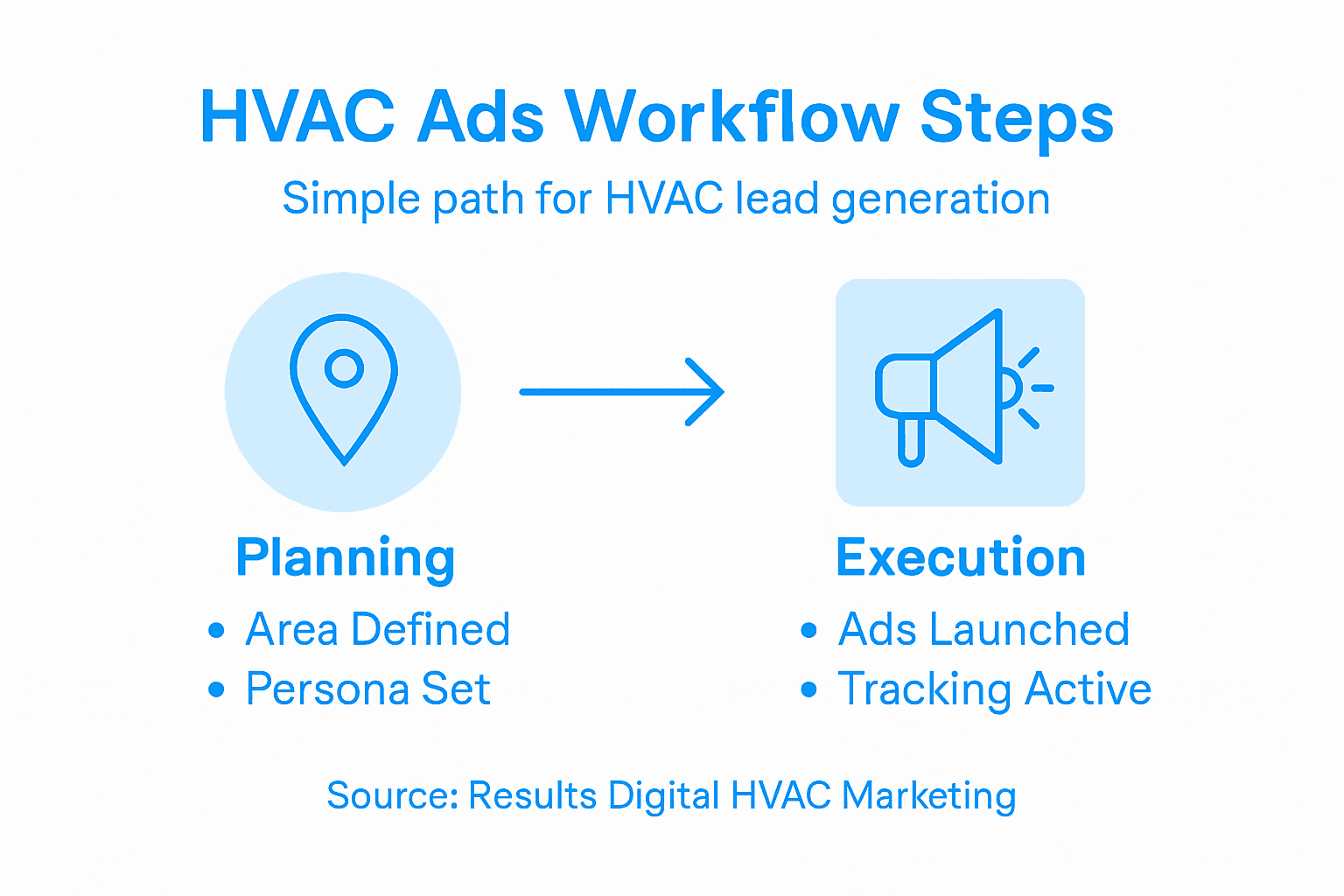
Pro tip: Establish a consistent naming convention for your conversion events to streamline reporting and make cross-campaign performance comparisons effortless.
Step 5: Monitor results and refine campaign settings
Continuous monitoring and strategic refinement are the keys to transforming your HVAC Google Ads from a basic marketing effort into a precision lead generation machine. You’ll need to develop a systematic approach to analyzing campaign performance.
Begin by evaluating comprehensive campaign metrics that go beyond surface-level data. Your performance review should focus on critical indicators such as:
- Cost per lead
- Conversion rate
- Click-through rate
- Quality score
- Total lead volume
- Lead quality percentage
Implement strategic performance tracking by breaking down your analysis into multiple dimensions:
- Geographic performance by service area
- Keyword effectiveness
- Ad creative performance
- Time-of-day conversion rates
- Device-specific engagement
Data-driven refinement separates successful campaigns from mediocre ones.
Adjust campaign parameters dynamically based on your insights. This might involve reallocating budget, pausing underperforming keywords, or tweaking ad copy to improve engagement. Remember that optimization is an ongoing process requiring consistent attention and incremental improvements.
Pro tip: Schedule a weekly 30-minute performance review to catch trends early and make immediate, targeted adjustments to your campaign settings.
Compare key HVAC campaign performance metrics and their value for ongoing optimization:
| Metric | Measures | Use for Improvement |
|---|---|---|
| Cost per Lead | Cost to acquire one new lead | Identify budget efficiency |
| Conversion Rate | % of clicks becoming leads | Reveal landing page effectiveness |
| Quality Score | Ad/keyword relevance score | Lower costs, boost ad visibility |
| Lead Quality % | Portion of high-value leads | Guide targeting refinements |
Take Control of Your HVAC Lead Generation with Expert Local Ads Setup
The “Local Ads Setup Workflow for HVAC Lead Generation” article highlights common challenges like defining precise local service areas, creating targeted Google Ads campaigns, and tracking conversions effectively. If you find yourself overwhelmed by managing keywords, ad creatives, or campaign settings and want to eliminate guesswork in generating high-quality leads, you are not alone. Many HVAC contractors struggle to optimize their digital ads because of unclear audience targeting or incomplete lead tracking.
At Results Digital, we specialize in solving exactly these pain points. Our approach combines industry-specific expertise with advanced digital marketing strategies tailored to HVAC professionals. We help you build campaigns that focus sharply on your geographic service zones, implement strategic keyword grouping, and set up conversion tracking that captures every call, form submission, and consultation request. From custom website design to precision Google Ads management, we provide transparent, measurable solutions with no long-term contracts. Our veteran-owned agency ensures your local HVAC business dominates your market without competing conflicts through our exclusive partnership model.
Ready to turn your local ads into a powerful lead generation engine? Take the next step by exploring our proven landing page design and lead capture strategies and discover how we can fuel your HVAC growth. Visit Results Digital today to get started.
Are you prepared to finally master your local HVAC advertising and see consistent, qualified leads?
Contact us now at Results Digital to build your custom, data-driven campaign and experience the difference of focused, expert lead generation designed just for your HVAC business.
Frequently Asked Questions
How do I define my local service area for HVAC lead generation?
To define your local service area, map out a realistic 30-50 mile radius around your business location. Consider factors like population density, travel time for service calls, and your team’s capacity to serve those areas.
What are the key elements to set up a Google Ads campaign for HVAC leads?
Key elements for your Google Ads setup include selecting “Leads” as your campaign objective, configuring geographical targeting, and establishing a daily budget. Organize ad groups around specific HVAC services and include relevant keywords to attract your target audience.
What should I include in my HVAC landing pages to improve lead conversion?
Your HVAC landing pages should have clear headlines, professional images, and customer testimonials. Ensure that contact information is prominent, and include strong calls-to-action that guide visitors toward scheduling a consultation or requesting a quote.
How can I track leads effectively in my HVAC marketing strategy?
To track leads effectively, implement conversion tracking for multiple customer interactions such as phone calls, website form submissions, and chat interactions. Create unique tracking tags for different service requests to gain insight into the types of leads you’re generating.
What metrics should I monitor to refine my HVAC advertising campaigns?
You should monitor metrics such as cost per lead, conversion rate, and click-through rate to evaluate your HVAC advertising campaigns. Regular evaluation of these metrics helps identify areas for improvement and allows for dynamic budget reallocation to enhance overall results.
How often should I review my Google Ads campaign performance?
Aim to conduct a performance review of your Google Ads campaign weekly to identify trends and make necessary adjustments. Regular reviews can help you catch issues early and refine your strategies to maximize lead generation efficiency.
Recommended
- Lead Generation Strategies 2025: Winning More Local HVAC Customers
- Why Invest in Google Ads for HVAC Leads
- Role of Digital Advertising in HVAC Lead Growth
- Google Ads Explained for Contractors: Win More HVAC Leads
- Plumbing Drain Repair – Orange County, California – MDTECH APPLIANCE REPAIR
- Gas Booster – De Bouw Service
- Digital Markteting for Roofing Companies
- Digital Marketing for Fire Protection Companies
- Digital Marketing for Damage Restoration Companies
- Digital Marketing for Asbestos Abatement Companies
